
Encyclopedia - Second International
 Established in 1889 the
Second International comprised a Franco-German dominated world socialist
organisation dedicated to global reform of capitalist societies.
Established in 1889 the
Second International comprised a Franco-German dominated world socialist
organisation dedicated to global reform of capitalist societies.
Although the organisation boasted socialist membership from many countries worldwide its policies and spokesmen tended to be derived from western Europe. This did not however result in a single set of policy recommendations. As would subsequently bedevil the organisation which succeeded the Second International, the so-called Zimmerwald Movement, conflicts between moderate and revolutionaries inhibited broad agreement on strategy.
While the 'gradualists' merely favoured reform of existing constitutional frameworks the revolutionary element of the organisation favoured wholesale replacement, by violent means if need be, of existing systems of government.
In 1896 the organisation acted to exclude anarchists from its ranks, requiring that its members instead profess support for parliamentary political reform. Among its early leaders were Engels, Bebel, Kautsky and Plekhanov; the Second International proved adept at encouraging labour legislation geared towards improving the lot of the working classes.
One key area in which both wings of the organisation were in agreement was in the resolve to prevent the development of a European war. To that end the Second International's 1912 Manifesto, unveiled at that year's Basle Conference, called upon workers of the world to unite in refusing to take up arms against each other.
Such was the apparent solidarity among socialist representatives from all countries in their anti-war stance that European governments were unsure during the July Crisis of 1914 of the extent of public support they could count upon should war break out.
In the event the murder of the leading French socialist Jean Jaures on 31 July 1914 robbed the Second International of its most widely respected spokesman. To the surprise of many governments the public at large were swept up in war euphoria throughout August 1914, and included among their number socialists who chose to rally to the national cause. With governments protesting that their own war was to be strictly defensive many socialists assuaged their consciences in the belief that they were not aiding aggressive wartime expansionism.
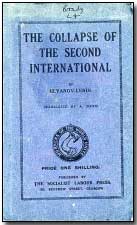
With the collapse of the Second International in August 1914 as an effective socialist vehicle a new anti-war organisation sprang up in 1915, the similarly ineffective Zimmerwald Movement.
A Kite Balloon was an observation balloon controlled by a cable from the ground.
- Did you know?
