
Primary Documents - Bryce Report into German Atrocities in Belgium, 12 May 1915
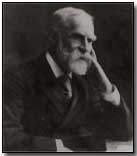 The British government,
headed by Prime Minister
Herbert Asquith,
concerned by persistent reports of German brutality towards the civilian
population in invaded Belgium in 1914, consequently requested
James Bryce to
prepare an independent report based upon his and an appointed committee's
findings.
The British government,
headed by Prime Minister
Herbert Asquith,
concerned by persistent reports of German brutality towards the civilian
population in invaded Belgium in 1914, consequently requested
James Bryce to
prepare an independent report based upon his and an appointed committee's
findings.
The committee might reasonably have been expected to present decidedly biased findings given its entirely British composition. However Bryce was a widely respected former Ambassador to the United States and his report was viewed as credible in Washington, thus seriously damaging Germany in the eyes of U.S. public and political opinion.
In the event Bryce's report (produced in 30 languages in May 1915) present an extreme view of German acts of brutality in occupied Belgium. That such acts took place was not in doubt. However the committee's tendency to dwell upon the more lurid eye-witness reports led to the report being discredited (chiefly in the immediate post-war years).
More seriously, it led to a tendency by international governments to regard with suspicion similar 'official' reports produced in subsequent years, including early emerging details of the Nazi treatment of Jews during World War Two.
The Bryce Report
Report of the Committee on Alleged German Outrages
Appointed by His Britannic
Majesty's Government and Presided Over by the Right Hon. Viscount Bryce, O.M.&c.,
&c.,
Formerly British Ambassador at Washington
Table of Contents
Warrant of
Appointment
Introductory Observations
Part I
Conduct of German Troops in Belgium
Liege and
District
Valleys
of the Meuse and Sambre
The Aerschot, Malines, Vilvorde and Louvain Quadrangle
Louvain,
Termonde, Alost
Part II
Breaches of Rules and Usages
of War and Acts of Inhumanity in Invaded Territories
1. Treatment of the Civil Population
(a)
Killing of Non-Combatants
(b) Treatment of Women and Children
(c) The Use of Civilians as Screens
(d) The Looting, Burning and Destroying of Property
2.
Offences Against Combatants
(a) Killing the Wounded or Prisoners
(b) Firing on Hospitals
(c) Abuse of Red Cross and White Flag
Conclusions
Warrant of Appointment
I hereby appoint:
THE RIGHT HON. VISCOUNT BRYCE, O.M.;
THE RIGHT HON. SIR FREDERICK POLLOCK, Bt., K.C.;
SIR ALFRED HOPKINSON, K.C;
MR. H. A. L. FISHER, Vice-chancellor of the University of Sheffield; and
MR.. HAROLD COX;
to be a Committee to consider and advise on the evidence collected on behalf of His Majesty's Government as to outrages alleged to have been committed by German troops during the present War, cases of alleged maltreatment of civilians in the invaded territories, and breaches of the laws and established usages of war; and to prepare a report for His Majesty's Government allowing the conclusion at which they arrive on the evidence now available.
And I appoint Viscount Bryce to be Chairman, and Mr. E. Grimwood Mears and Mr. W.J.H. Brodrick, barristers-at-law, to be Joint Secretaries to the Committee.
(SIGNED) H. H. ASQUITH
15th December 1914.
SIR KENELM E. DIGBY, K.C., G.C.B., was appointed an additional member of the Committee on 22nd January 1915.
Introductory Observations
To the Right Honourable H.
H. ASQUITH, &c., &c., First
Lord of H.M. Treasury.
The Committee have the honour to present and transmit to you a report upon the evidence which has been submitted to them regarding outrages alleged to have been committed by the German troops in the present war.
By the terms of their appointment the Committee were directed "to consider and advise on the evidence collected on behalf of His Majesty's Government, as to outrages alleged to have been committed by German troops during the present war, cases of allege d maltreatment of civilians in the invaded territories, and breaches of the laws and established usages of war; and to prepare a report for His Majesty's Government showing the conclusion at which they arrive on the evidence now available."
It may be convenient that before proceeding to state how we have dealt with the materials, and what are the conclusions we have reached, we should set out the manner in which the evidence came into being, and its nature.
In the month of September 1914 a Minute was, at the instance of the Prime Minister, drawn up and signed by the Home Secretary and the Attorney-General. It stated the need that had arisen for investigating the accusations of inhumanity and outrage that had been brought against the German soldiers, and indicated the precautions to be taken in collecting evidence that would be needed to ensure its accuracy. Pursuant to this Minute steps were taken under the direction of the Home Office to collect evidence, and a great many persons who could give it were seen and examined.
For some three or four months before the appointment of the Committee, the Home Office had been collecting a large body of evidence. [Taken from Belgian witnesses, some soldiers, but most of them civilians from those towns and villages through which the German Army passed, and from British officers and soldiers.] More than 1,200 depositions made by these witnesses have been submitted to and considered by the Committee. Nearly all of these were obtained under the supervision of Sir Charles Mathews, the Director of Public Prosecutions, and of Mr. E. Grimwood Mears, barrister of the Inner Temple, whilst in addition Professor J. H. Morgan has collected a number of statements mainly from British soldiers, :which have also been submitted to the Committee.
The labour involved in securing, in a comparatively short time, so large a number of statements from witnesses scattered all over the United Kingdom, made it necessary to employ a good many examiners. The depositions were in all cases taken down in this country by gentlemen of legal knowledge and experience, though, of course, they had no authority to administer an oath. They were instructed not to "lead" the witnesses, or make any suggestions to them, and also to impress upon them the necessity for care and precision in giving their evidence.
They were also directed to tat the evidence critically, and as far as possible satisfy themselves, by putting questions which arose out of the evidence, that the witnesses were speaking the truth. They were, in fact, to examine them, so far as the testimony given provided materials for cross-examination.
We have seen and conversed with many of these gentlemen, and have been greatly impressed by their ability and by what we have gathered as to the fairness of spirit which they brought to their task. We feel certain that the instructions given have been scrupulously observed.
In many cases those who took the evidence have added their comments upon the intelligence and demeanour of the witnesses, stating the impression which each witness made, and indicating any cases in which the story told appeared to them open to doubt or suspicion. In coming to a conclusion upon the evidence the Committee have been greatly assisted by these expressions of opinion, and have uniformly rejected every deposition on which an opinion adverse to the witness has been recorded.
This seems to be a fitting place at which to put on record the invaluable help which we have received from our Secretaries, Mr. E. Grimwood Mears and Mr. W. J. E. Brodrick, whose careful diligence and minute knowledge of the evidence have been of the utmost service. Without their skill, judgement, and untiring industry the labour of examining and appraising each part of so large a mass of testimony would have occupied us for six months instead of three .
The marginal references in this Report indicate the particular deposition or depositions on which the statements made in the text are based.
The depositions printed in the Appendix themselves show that the stories were tested in detail, and in none of these have we been able to detect the trace of any desire to "make a case" against the German army. Care was taken to impress upon the witness that the giving of evidence was a grave and serious matter, and every deposition submitted to us was signed by the witness in the presence of the examiner.
A noteworthy feature of many of the depositions is that though taken at different places and on different dates, and by different lawyers from different witnesses, they often corroborate each other in a striking manner.
The evidence is all couched in the very words which the witnesses used, and where they spoke, as the Belgian witnesses did, in Flemish or French, pains were taken to have competent translators, and to make certain that the translation was exact.
Seldom did these Belgian witnesses show a desire to describe what they had seen or suffered. The lawyers who took the depositions were surprised to find how little vindictiveness, or indeed passion, they showed, and how generally free from emotional excitement their narratives were. Many hesitated to speak lest what they said, if it should ever be published, might involve their friends or relatives at home in danger, and it was found necessary to give an absolute promise that names should not be disclosed.
For this reason names have been omitted.
A large number of depositions, and extracts from depositions, will be found in Appendix A., and to these your attention is directed.
In all cases these are given as nearly as possible (for abbreviation was sometimes inevitable) in the exact words of the witness, and wherever a statement has been made by a witness tending to exculpate the German troops, it has been given in full. Excisions have been made only where it has been felt necessary to conceal the identity of the deponent, or to omit what are merely hearsay statements, or are palpably irrelevant.
In every case the name and description of the witnesses are given in the original depositions and in copies which have been furnished to us by H.M. Government. The originals remain in the custody of the Home Department, where they will be available, in case of need, for reference after the conclusion of the War.
The Committee have also had before them a number of diaries taken from the German dead.
It appears to be the custom in the German army for soldiers to be encouraged to keep diaries and record in them the chief events of each day. A good many of these diaries were collected on the field when British troops were advancing over ground which had been held by the enemy, were sent to Head Quarters in France, and despatched thence to the War Office in England. They passed into the possession of the Prisoners of War Information Bureau, and were handed by it to our secretaries.
They have been translated with great care. We have inspected them and are absolutely satisfied of their authenticity. They have thrown important light upon the methods followed in the conduct of the war. In one respect indeed, they are the most weighty part of the evidence, because they proceed from a hostile source and are not open to any such criticism on the ground of bias as might be applied to Belgian testimony.
From time to time references to these diaries will be found in the text of the Report. In Appendix B. they are set out at greater length both in the German original and in an English translation, together with a few photographs of the more important entries.
In Appendix C. are set out a number of German proclamations. Most of these are included in the Belgian Report No. VI. which has been furnished to us. Actual specimens of original proclamations, issued by or at the bidding of the German military authorities, and posted in the Belgian and French towns mentioned, have been produced to us, and copies thereof are to be found in this Appendix.
Appendix D. contains the rules of the Hague Convention dealing with the conduct of War On Land as adopted in 1907, Germany being one of the signatory powers. In Appendix E. will be found a selection of statements collected in France by Professor Morgan.
These five appendices are contained in a separate volume.
In dealing with the evidence we have recognised the importance of testing it severely, and so far as the conditions permit we have followed the principles which are recognised in the Courts of England, the British Overseas Dominions, and the United States.
We have also as already noted set aside the testimony of any witnesses who did not favourably impress the lawyers who took their depositions, and have rejected hearsay evidence except in cases where hearsay furnished an undesigned confirmation of facts with regard to which we already possessed direct testimony from some other source, or explained in a natural way facts imperfectly narrated or otherwise perplexing.
[For instance, the dead body of a man is found lying on the doorstep, or a woman is seen who has the appearance of having been outraged. So far the fact are proved by the direct evidence of the person by whom they have been seen. Information is sought for by him as to the circumstances under which the death or outrage took place. The bystanders who saw the circumstance, but who are not now accessible, relate what they saw, and this is reported by the witness to the examiner and is placed on record in the depositions. We have had no hesitation in taking such evidence into consideration.]
It is natural to ask whether much of the evidence given, especially by the Belgian witnesses, may not be due to excitement and overstrained emotions, and whether, apart from deliberate. falsehood persons who mean to speak the truth may not in a more or less hysterical condition have been imagining themselves to have seen the things which they say that they saw. Both the lawyers who took the depositions, and we when we came to examine them, full recognised this possibility.
The lawyers, as already observed, took pains to test each witness and either rejected, or appended a note of distrust to, the testimony of those who failed to impress them favourably. We have carried the sifting still further by also omitting from the depositions those in which we found something that seemed too exceptional to be accepted on the faith of one witness only, or too little supported by other evidence pointing to like facts. Many depositions have thus been omitted on which , although they are probably true, we think it safer not to place reliance.
Notwithstanding these precautions, we began the inquiry with doubts whether a positive result would be attained. But the further we went and the more evidence we examined so much the more was our scepticism reduced. There might be some exaggeration in one witness, possible delusion in another. inaccuracies in a third. When, however, we found that things which had at first seemed improbable were testified to by many witnesses coming from different places, having had no communication with one another, and knowing nothing of one another's statements the points in which they all agreed became more and more evidently true.
And when this concurrence of testimony, this convergence up on what were substantially the same broad facts, showed itself in hundreds of depositions, the truth of those broad facts stood out beyond question. The force of the evidence is cumulative. Its worth can be estimated only by perusing the testimony as a whole. If any further confirmation had been needed, we found it in the diaries in which German officers and private soldiers have recorded incidents just such as those to which the Belgian witnesses depose.
The experienced lawyers who took the depositions tell us that they passed from the same stage of doubt into the same stage of conviction. They also began their work in a sceptical spirit, expecting to find much of the evidence coloured by passion, or prompted by an excited fancy. But they were impressed by the general moderation and matter of fact level-headedness of the witnesses.
We interrogated them, particularly regarding some of the most startling and shocking incidents which appear in the evidence laid before us, and where they expressed a doubt we have excluded the evidence, admitting it as regards the cases in which they stated that the witnesses seemed to them to be speaking the truth, and that they themselves believed the incidents referred to have happened. It is for this reason that we have inserted among the depositions printed in the Appendix several cases which we might otherwise have deemed scarcely credible.
The Committee has conducted its investigations and come to its conclusions independently of the reports issued by the French and Belgian Commissions, but it has no reason to doubt that those conclusions are in substantial accord with the conclusions that have been reached by these two Commissions.
Arrangement of the Report
As respects the framework and arrangement of the Report, it has been deemed desirable to present first of all what may be called a general historical account of the events which happened, and the conditions which prevailed in the parts of Belgium which lay along the line of the German march, and thereafter to set forth the evidence which bears upon particular classes of offences against the usages of civilised warfare, evidence which shows to what extent the provisions of the Hague Convention have been disregarded.
This method, no doubt, involves a certain amount of overlapping, for some of the offence belonging to the later part of the Report will have been already referred to in the earlier part which deals with the invasion of Belgium. But the importance of presenting a connected narrative of events seems to outweigh the disadvantage of occasional repetition.
The Report will therefore be found to consist of two parts, viz.:
(1) An analysis and summary of the evidence regarding the conduct of the German troops in Belgium towards the civilian population of that country during the first few weeks of the invasion.
(2) An examination of the evidence relating to breaches of the rules and usages of war and acts of inhumanity, committed by German soldiers or groups of soldiers, during the first four months of the war whether in Belgium or in France.
This second part has again been sub-divided into two sections;
a. Offences committed against non-combatant civilians during the conduct of the war generally.
b. Offences omitted against combatants, whether in Belgium or in France.
Part I
The Conduct of the German Troops in Belgium
Although the neutrality of Belgium had been guaranteed by a treaty signed in 1839 to which France, Prussia, and Great Britain were parties, and although, apart altogether from any duties imposed by treaty, no belligerent nation has any right to claim a passage for its army across the territory of a neutral state, the position which Belgium held between the German Empire and France had obliged her to consider the possibility that in the event of a war between these two Powers her neutrality might not be respected.
In 1911 the Belgian Minister at Berlin had requested an assurance from Germany that she would observe the Treaty of 1839; and the Chancellor of the Empire had declared that Germany had no intention of violating Belgian neutrality. Again in 1913 the German Secretary of State at a meeting of a Budget Committee Or the Reichstag had declared that "Belgian neutrality is provided for by international conventions and Germany is determined to respect those conventions."
Finally, on July 31, 1914, when the danger of war between Germany and France seemed imminent, Herr von Below, the German Minister in Brussels, being interrogated by the Belgian Foreign Department, replied that he knew of the assurances given by the German Chancellor in 1911, and that he "was certain that the sentiments expressed at that time had not changed." Nevertheless on August 2 the same Minister presented a note to the Belgian Government demanding a passage through Belgium for the German army on pain of an instant declaration of war.
Startled as they were by the suddenness with which this terrific war cloud had risen on the eastern horizon, the leaders of the nation rallied round the King in his resolution to refuse the demand and to prepare for resistance. They were aware of the danger which would confront the civilian population of the country if it were tempted to take part in the work of national defence. Orders were accordingly issued by the civil governors of provinces, and by the burgomasters of towns, that the civilian inhabitants were to take no part in hostilities and to offer no provocation to the invaders.
That no excuse might be furnished for severities, the populations of many important towns were instructed to surrender all firearms into the hands of the local officials. [Copies of typical proclamations have been printed in L'Allemagne et la Belgique, Documents Annexées, xxxvi.]
This happened on August 2. On the evening of August 3 the German troops crossed the frontier. The storm burst so suddenly that neither party had time to adjust its mind to the situation. The Germans seem to have expected an easy passage. The Belgian population, never dreaming of an attack, were startled and stupefied.
Liege and District
On August 4th the roads converging upon Liege from northeast, east, and south were covered with German Death's Head Hussars and Uhlans pressing forward to seize the passage over the Meuse, From the very beginning of the operations the civilian population of the villages lying upon the line of the German advance were made to experience the extreme horrors of war.
"On the 4th of August," says one witness, "at Herve" (a village not far from the frontier), "I saw at about 2 o'clock in the afternoon, near the station, five Uhlans; these were " the first German troops I had seen. They were followed by a German officer and some soldiers in a motor car. The men in the car called out to a couple of young fellows who were standing about 30 yards away. The young men, being afraid, ran off and then the Germans fired and killed one of them named D ..."
The murder of this innocent fugitive civilian was a prelude to the burning and pillage of Herve and of other villages in the neighbourhood, to the indiscriminate shooting of civilians of both sexes, and to the organised military execution of batches of selected males. Thus at Herve some 50 men escaping from the burning houses were seized, taken outside the town and shot.
At Melen, a hamlet west of Herve, 40 men were shot. In one household alone the father and mother (names given) were shot, the daughter died after being repeatedly outraged, and the son was wounded. Nor were children exempt. "About August 4," says one witness, "near-Vottern, we were pursuing some Uhlans. I saw a man, woman, and a girl about nine, who had been killed. They were on the threshold of a house, one on the top of the other, as if they had been shot down, one after the other, as they tried to escape."
The burning of the villages in this neighbourhood and the wholesale slaughter of civilians, such as occurred at Herve, Micheroux, and Soumagne, appear to be connected with the exasperation caused by the resistance of Fort Fleron, whose guns barred the main road from Aix la Chapelle to Liege. Enraged by the losses which they had sustained, suspicious of the temper of the civilian population, and probably thinking that by exceptional severities at the outset they could cow the spirit of the Belgian nation, the German officers and men speedily accustomed themselves to the slaughter of civilians.
How rapidly the process was effected is illustrated by an entry in the diary of Kurt, a one year's man in the 1st Jaegers, who on August 5th was in front of Fort Fleron. He illustrates his story by a sketch map. "The position," he says, "was dangerous. As suspicious civilians were hanging about - houses 1, 2, 3, 4, 5, were cleared, the owners arrested (and shot the following day). Suddenly village A was fired at. Out of it bursts our baggage train, and the 4th Company of " the 27th Regiment who had lost their way and been shelled by our own artillery. From the point D.P. (shown in diary) I shoot a civilian with rifle at 400 metres slap through the head, as we afterward s ascertained."
Within a few hours Hoffman, whilst in house 3, was himself under fire from his own comrades and narrowly escaped being killed. A German, ignorant that house 3 had been occupied, reported, as was the fact, that he had been fired upon from that house. He had been challenged by the field patrol, and failed to give the countersign. Hoffman continues: "Ten minutes later, people approach who are talking excitedly" - apparently Germans. I call out 'Halt, who's there ?'
Suddenly rapid fire is opened upon us, which I can only escape by quickly jumping on one side-- with bullets and fragments of wall and pieces of glass flying round me. I call out 'Halt, here Field Patrol.' Then it stops, and there appears Lieutenant Ramer with three platoons. A man has reported that he had been shot at out of our house; no wonder, if he does not give the countersign."
The entry, though dated August the 5th, was evidently written on the 6th or later, because the writer refers to the suspicious civilians as having been shot on that day. Hoffman does not indicate of what offence these civilians were guilty, and there is no positive evidence to connect their slaughter with the report made by the German who had been fired on by his comrades. They were "suspicious" and that was enough.
The systematic execution of civilians, which in some cases, as the diary just cited shows, was founded on a genuine mistake, was given a wide extension through the province of Liege. In Soumagne and Micheroux very many civilians were summarily shot. In a field belonging to a man named E . . . . 56 or 57 were put to death.
A German officer said: "You have shot at us." One of the villagers asked to be allowed to speak, and said: "If you think these people fired, kill me, but let them go." The answer was three volleys. The survivors were bayoneted. Their corpses were seen in the field that night by another witness. One at least had been mutilated. These were not the only victims in Soumagne, The eye-witness of the massacre saw, on his way home, 20 bodies, one that of a young girl of 13. Another witness saw 19 corpses in a meadow.
At Blegny Trembleur, on the 6th, some civilians were captured by German soldiers, who took steps to put them to death forthwith, but were restrained by the arrival of an officer. The prisoners subsequently were taken off to Battice and five were shot in a field. No reason was assigned for their murder.
In the meantime house burners were at work. On the 6th Battice was destroyed in part. From the 8th to the 10th over 300 houses were burnt at Herve, while mounted men shot into doors and windows to prevent the escape of the inhabitants.
At Heure le Romain on or about the 15th of August all the male inhabitants, including some bedridden old men were imprisoned in the church. The burgomaster's brother and the priest were bayoneted.
On or about the 14th and 15th the village of Vise was completely destroyed. Officers directed the incendiaries, who worked methodically with benzine. Antiques and china were removed from the houses, before their destruction, by officers, who guarded the plunder revolver in hand. The house of a witness, which contained valuables of this kind, was protected for a time by a notice posted on the door by officers. This notice has been produced to the Committee. After the removal of the valuables this house also was burnt.
German soldiers had arrived on the 15th at Blegny Trembleur and seized a quantity of wine. On the 16th prisoners were taken; four, including the priest and the burgomaster, were shot. On the same day 200 (so-called) hostages were seized at Flemalle and marched off. There they were told that unless Fort Flemalle surrendered by noon they would be shot. It did surrender and they were released.
Entries in a German diary show that on the 19th the German soldiers gave themselves up to debauchery in the streets of Liege, and on the night of the 20th (Thursday) a massacre took place in the streets, beginning near the Cafe Carpentier, at which there is said to have been a dinner attended by Russian and other students.
A proclamation issued by General Kolewe on the following day gave the German version of the affair, which was that his troops had been fired on by Russian students. The diary states that in the night the inhabitants of Liege became mutinous and that 50 persons were shot. The Belgian witnesses vehemently deny that there had been any provocation given, some stating that many German soldiers were drunk, others giving evidence which indicates that the affair was planned beforehand. It is stated that at 5 o'clock in the evening, long before the shooting, a citizen was warned by a friendly German soldier not to go out that night.
Though the cause of the massacre is in dispute, the results are known with certainty. - The Rue des Pitteurs and houses in the Place de l'Universite and the Quai des Pecheurs were systematically fired with benzine, and many inhabitants were burnt alive in their houses, their efforts to escape being prevented by rifle fire. Twenty people were shot, while trying to escape, before the eyes of one of the witnesses.
The Liege Fire Brigade turned out but was not allowed to extinguish the fire. Its carts, however, were usefully employed in removing heaps of civilian corpses to the Town Hall. The fire burnt on through the night and the murders continued on the following day, the 21st. Thirty-two civilians were killed on that day in the Place de l'Universite alone, and a witness states that this was followed by the rape in open day of 15 or 20 women on tables in the square itself.
No depositions are before us which deal with events in the city of Liege after this date. Outrages, however, continued in various places in the province.
For example, on or about the 21st of August, at Pepinster, two witnesses were seized as hostages and were threatened, together with five others, that unless they could discover a civilian who was alleged to have shot a soldier in the leg, they would be shot themselves. They escaped their fate because one of the hostages convinced the officer that the alleged shooting, if it took place at all, took place in the Commune of Cornesse and not that of Pepinster, whereupon the Burgomaster of Cornesse, who was old and very deaf, was shot forthwith.
The outrages on the civilian population were not confined to the villages mentioned above, but appear to have been general throughout this district from the very outbreak of the war.
An entry in one of the diaries says: "We crossed the Belgian frontier on 15th August 1914 at 11.50 in the forenoon, and then we went steadily along the main road till we got into Belgium. Hardly were we there when we had a horrible sight. Houses were burnt down, the inhabitants chased away and some of them shot. Not one of the hundreds of houses were spared. Everything was plundered and burnt. Hardly had we passed through this large village before the next village was burnt, and so it went on continuously.
On the 16th August 1914 the large village of Barchon was burnt down. On the same day we crossed the bridge over the Meuse at 11.50 in the morning. We then arrived at the town of Wandre. Here the houses were spared, but everything was examined. At last we were out of the town and everything went in ruins. In one house a whole collection of weapons was found. The inhabitants without exception were brought out and shot.
This shooting was heart-breaking as they all knelt down and prayed, but that was no ground for mercy. A few shots rang out and they fell back into the green grass and slept for ever." ["Die Einwohner wurden samt und sonders herausgeholt Imd erschossen: aber diese Erschiessen war direkt herzzerreisend wie sie alle knieben und beteten, aber dies half kein Erbarmen. Ein " paar Schafsse krackten lmd die fielen racklings in das grufne Gras und verschliefen frummer."]
Valleys of Meuse and Sambre
While the First Army, under the command of General Alexander von Kluck, was mastering the passages of the Meuse between Vise and Namur, and carrying out the scheme of devastation which has already been described, detachments of the Second German Army, under General von Bulow, were proceeding up the Meuse valley towards Namur. On Wednesday, Au gust the 12th, the town of Huy, which stands halfway between Namur and Liege, was seized. On August 20 German guns opened fire on Namur itself.
Three days later the city was evacuated by its defenders, and the Germans proceeded along the valley of the Samb re through Tamines and Charleroi to Mons. Meanwhile a force under General von Hausen had advanced upon Dinant, by Laroche, Marche, and Achene, and on August 15th made an unsuccessful assault upon that town. A few days later the attack was renewed and with success, and, Dinant captured, Von Hausen's army streamed into France by Bouvines and Rethel, firing and looting the villages and shooting the inhabitants as they passed through.
The evidence with regard to the Province of Namur is less voluminous than that relating to the north of Belgium. This is largely due to the fact that the testimony of soldiers is seldom available, as the towns and villages once occupied by the Germans were seldom reoccupied by the opposing troops, and the number of refugees who have reached England from the Namur district is comparatively small.
Andenne
Andenne is a small town on the Meuse between Liege and Namur, lying opposite the village of Seilles (with which it is connected by a bridge over the river), and was one of the earlier places reached on the German advance up the Meuse. In order to understand the story of the massacre which occurred there on Thursday, August 20th, the following facts should be borne in mind: The German advance was hotly contested by Belgian and French troops.
From daybreak onwards on the 19th August the 8th Belgian Regiment of the Line were fighting with the German troops on the left bank of the Meuse on the heights of Seilles. At 8 a.m. on the 19th the Belgians found further resistance impossible in the district, and retired under shelter of the forts of Namur. As they retired they blew up Andenne bridge. The first Germans arrived in Andenne at about 10 a.m when 10 or 12 Uhlans rode into the town.
They went to the bridge and found it was destroyed. They then retired, but returned about half an hour afterwards. Soon after that several thousand Germans entered the town and made arrangements to spend the night there. Thus, on the evening of the 19th August a large body of German troops were in possession of the town, which they had entered without any resistance on the part of the allied armies or of the civilian population.
About 4.30 on the next afternoon shots were filed from the left bank of the Meuse and replied to by the Germans in Andenne. The village of Andenne had been isolated from the district on the left bank of the Meuse by the destruction of the bridge, and there is nothing to suggest that the firing on the left came from the inhabitants of Andenne. Almost immediately, however, the slaughter of these inhabitants began, and continued for over two hours and intermittently during the night. Machine guns were brought into play. The German troops were said to be for the most part drunk, and they certainly murdered and ravaged unchecked. A reference to the German diaries in the Appendix will give some idea of the extent to which the army gave itself up to drink through the month of August.
When the fire slackened about 7 o'clock, many of the towns people fled in the direction of the quarries; others remained in their houses. At this moment the whole of the district round the station was on fire and houses were flaming over a distance of 2 kilometres in the direction of the hamlet of Tramaka. The little farms which rise one above the other on the high ground of the right bank were also burning.
At 6 o'clock on the following morning, the 21st, the Germans began to drag the inhabitants from their houses. Men, women and children were driven into the square where the sexes were separated. Three men were then shot, and a fourth was bayoneted. A German colonel was present whose intention in the first place appeared to be to shoot all the men.
A young German girl who had been staying in the neighbourhood interceded with him, and after some parleying, some of the prisoners were picked out, taken to the banks of the Meuse and there shot. The colonel accused the population of firing on the soldiers, but there is no reason to think that any of them had done so, and no inquiry appears to have been made.
About 400 people lost their lives in this massacre, some on the banks of the Meuse, where they were shot according to orders given, and some in the cellars of the houses where they had taken refuge. Eight men belonging to one family were murdered. Another man was placed close to a machine gun which was fired through him. His wife brought his body home on a wheel-barrow. The Germans broke into her house and ransacked it, and piled up all the eatables in a heap on the foot and relieved themselves upon it.
A hair-dresser was murdered in his kitchen while he was sitting with a child on each knee. A paralytic was murdered in his garden. After this came the general sack of the town. Many of the inhabitants who escaped the massacre were kept as prisoners and compelled to clear the houses of corpses and bury them in trenches. These prisoners were subsequently used as a shelter and protection for a pontoon bridge which the Germans had built across the river and were so used to prevent the Belgian forts from firing upon it.
A few days later the Germans celebrated a Fete Nocturne in the square. Hot wine, looted in the town, was drunk, and the women were compelled to give three cheers for the Kaiser and to sing "Deutschland Uber Alles."
Namur District
The fight round Namur was accompanied by sporadic outrages. Near Marchovelette wounded men were murdered in a farm by German soldiers. The farm was set on fire. A German cavalryman rode away holding in front of him one of the farmer's daughters crying and dishevelled.
At Temploux on the 23rd August a professor of modern languages at the College of Namur was shot at his front door by a German officer. Before he died he asked the officer the reason for this brutality, and the officer replied that he had lost his temper because some civilians had fired upon the Germans as they entered the village. This allegation was not proved. The Belgian army was still operating in the district, and it may well be that it was from them that the shots in question proceeded. After the murder the house was burnt.
On the 24th and 25th of August massacres were carried out at Surice, in which many persons belonging to the professional classes, as well as others, were killed.
Namur was entered on the 24th August. The troops signalised their entry by firing on a crowd of 10 unarmed unresisting civilians, ten alone of whom escaped.
A witness of good standing who was in Namur describes how the town was set on fire systematically in six different places. As the inhabitants fled from the burning houses they were shot by the German troops. Not less than 140 houses were burnt.
On the 25th the hospital at Namur was set on fire with inflammable pastilles, the pretext being that soldiers in the hospital had fired upon the Germans.
At Densee, on the 28th of August, a Belgian soldier who had been taken prisoner saw three civilian fellow prisoners shot. One was a cripple and another an old man of eighty who was paralysed. It was alleged by two German soldiers that these men had shot at them with rifles. Neither of them had rifles, nor had they anything in their pockets. The witness actually saw the Germans search them and nothing was found.
Charlerois District
In Tamines, a large village on the Meuse between Namur and Charleroi, the advance guard of the German army appeared in the first fortnight in August, and in this as well as in other villages in the district, it is proved that a large number of civilians, among them aged people, women and children, were deliberately killed by the soldiers. One witness describes how she saw a Belgian boy of fifteen shot on the village green at Tamines, and a day or two later on the same green a little girl and her two brothers (name given) who were looking at the German soldiers, were killed before her eyes for no apparent reason.
The principal massacre at Tamines took place about August the 23rd. A witness describes how he saw the public square littered with corpses and after a search found those of his wife and child, a little girl of seven.
Another witness, who lived near Tamines, went there on August 27th, and says: "It is absolutely destroyed and a mass of ruins."
At Morlanwelz, about this time, the British army, together with some French cavalry were compelled to retire before the German troops. The latter took the burgomaster and his man servant prisoner and shot them both in front of the H\'99tel de Ville at Peronne (Belgium), where the bodies were left in the street for 48 hours. They burnt the Hotel de Ville and 62 houses.
The usual accusation of firing by civilians was made. It is strenuously denied by the witness, who declares that three or four days before the arrival of the Germans, circulars had been distributed to every house and placards had been posted in the town ordering the deposit of all firearms at the Hotel de Ville and that this order had been complied with.
At Monceau-sur-Sambre, on the 21st August, a young man of eighteen was shot in his garden. His father and brother were seized in their house and shot in the courtyard of a neighbouring country house. The son was shot first. The father was compelled to stand close to the feet of his son's corpse and to fix his eyes upon him while he himself was shot. The corpse of the young man shot in the garden was carried into the house and put on a bed.
The next morning the Germans asked where the corpse was. When they found it was in the house they fetched straw, packed it round the bed on which the corpse was lying, and set fire to it and burnt the house down. A great many houses were burnt in Monceau.
A vivid picture of the events at Montigny-sur-Sambre has been given by a witness of high standing who had exceptional opportunities of observation. In the early morning of Saturday, August 2nd, Uhlans reached Montigny. The French army was about 4 kilometres away, but on a hill near the village were a detachment of French about 150 to 200 strong lying in ambush.
At about 1.30 the main body of the German army began to arrive. Marching with them were two groups of so-called hostages, about 400 in all. Of these, 300 were surrounded with a rope held by the front, rear, and outside men. The French troops in ambush opened fire, and immediately the Germans commenced to destroy the town. Incendiaries with a distinctive badge on their arm went down the main street throwing handfuls of inflammatory and explosive pastilles into the houses.
These pastilles were carried by them in bags, and in this way about 130 houses were destroyed in the main street. By 10.30 p.m. some 200 more hostages had been collected. These were drawn from Montigny itself and on that night about 50 men, women, and children were placed on the bridge over the Sambre and kept there all night. The bridge was similarly guarded for a day or two, apparently either from a fear that it was mined or in the belief that these men, women, and children would afford some protection to the Germans in the event of the French attempting to storm the bridge.
At one period of the German occupation of Montigny, eight nuns of the Order of Ste. Marie were captives on the bridge. House burning was accompanied by murder, and on the Monday morning 27 civilians from one parish alone were seen lying dead in the hospital.
Other outrages committed at Jumet, Bouffioulx, Charleroi, Marchiennes-au-Pont, Couillet, and Maubeuge are described in the depositions given in the Appendix.
Dinant
A clear statement of the outrages at Dinant, which many travellers will recall as a singularly picturesque town on the Meuse, is given by one witness, who says that the Germans began burning houses in the Rue St. Jacques on the 21st August, and that every house in the street was burnt. On the following day an engagement took place between the French and the Germans, and the witness spent the whole day in the cellar of a bank with his wife and children. On the morning of the 23rd, about 5 o'clock, firing ceased, and almost immediately afterwards a party of Germans came to the house. They rang the bell and began to batter at the door and windows.
The witness's wife went to the door and two or three Germans came in. The family were ordered out into the street. There they found another family, and the two families were driven with their hands above their heads along the Rue Grande. All the houses in the street were burning. The party was eventually put into a forge where there were a number of other prisoners, about a .hundred in all, and were kept there from 11 a.m. till 2 p.m. They were then taken to the prison.
There they were assembled in a courtyard and searched. No arms were found. They were then passed through into the prison itself and put into cells. The witness and his wife were separated from each other. During the next hour the witness heard rifle shots continually, and noticed in the corner of a court yard leading off the row of cells the body of a young man with a mantle thrown over it. He recognised the mantle as having belonged to his wife.
The witness's daughter was allowed to go out to see what had happened to her mother, and the witness himself was allowed to go across the courtyard half an hour afterwards for the same purpose. He found his wife lying on the floor in a room. She had bullet wounds in four places, but was alive and told her husband to return to the children, and he did so. About 5 o'clock in the evening he saw the German ringing out all the young and middle-aged men from the cells, and ranging their prisoners, to the number of 40, in three rows in the middle of the courtyard.
About 20 Germans were drawn up opposite, but before anything was done there was a tremendous fusillade from some point near the prison and the civilians were hurried back to their cells. Half an hour later the same 40 men were brought back into the courtyard. Almost immediately there was a second fusillade like the first and they were driven back to the cells again. About 7 o'clock the witness and other prisoners were brought out of their cell and marched out of the prison.
They went between two line of troops to Roche Bayard about a kilometre away. An hour later the women and children were separated and the prisoners were brought back to Dinant, passing the prison on their way. Just outside the prison the witness saw three lines of bodies, which he recognised as being those of neighbours. They were nearly all dead, but he noticed movement in some of them. There were about 120 bodies.
The prisoners were then taken up to the top of the hill outside Dinant and compelled to stay there till 8 o'clock in the morning. On the following day they were put into cattle trucks and taken thence to Coblenz. For three months they remained prisoners in Germany.
Unarmed civilians were killed in masses at other places near the prison. About 90 bodies were seen lying on the top of one another in a grass square opposite the convent. They included many relatives of a witness whose deposition will be found in the Appendix. This witness asked a German officer why her husband had been shot, and he told her that it was because two of her sons had been in the civil guard and had shot at the Germans.
As a matter of fact one of her sons was at that time in Liege and the other in Brussels. It is stated that beside the 90 corpses referred to above, 60 corpses of civilians were recovered from a hole in the brewery yard and that 48 bodies of women and children were found in a garden. The town was systematically set on fire by hand grenades.
Another witness saw a little girl of seven, one of whose legs was broken and the other injured by a bayonet.
We have no reason to believe that the civilian population of Dinant gave any provocation, or that any other defence can be put forward to justify the treatment inflicted upon its citizens.
As regards this town and the advance of the German army from Dinant to Rethel on the Aisne, a graphic account is given in the diary of a Saxon officer. [A copy of this diary was given by the French military authorities to the British Headquarters Staff in France, and the latter have communicated it to the Committee. It will be found in Appendix B. after the German diaries shown to us by the British War Office.]
This diary confirms what is clear from the evidence as a whole both as regards these and other districts, that civilians were constantly taken as prisoners, often dragged from their homes and shot under the direction of the authorities without any charge being made against them. An event of the kind is thus referred to in a diary entry:
"Apparently 200 men were shot. There must have been some innocent men amongst them. In future we shall have to hold an inquiry as to their guilt instead of shooting them." The shooting of inhabitants, women and children as well a men, went on after the Germans had passed Dinant on their way into France. The houses and villages were pillaged and property wantonly destroyed.
The Aerschot, Malines, Vilvorde and Louvain Quadrangle
About August 9 a powerful screen of cavalry masking the general advance of the first and second German armies was thrown forward into the provinces of Brabant and Limburg. The progress of the invaders was contested at several point, probably near Tirlemont on the Louvain road, and at Diest, Haelen, and Schaffen, on the Aerschot road, by detachments of the main Belgian army which was drawn up upon the line of the Dyle.
In their preliminary skirmishes the Belgians more than once gained advantages, but after the fall on August 15 of the last of the Liege forts, the great line of railway which runs through Liege towards Brussels and Antwerp in one direction and towards Namur and the French frontier in another, fell into the hands of the Germans. From this moment the advance of the main army was swift and irresistible.
On August 19 Louvain and Aerschot were occupied by the Germans, the former without resistance, the latter after a struggle which resulted early in the day in the retirement of the Belgian army upon Antwerp. On August 20 the invaders made their entry into Brussels.
The quadrangle of territory bounded by the towns of Aerschot, Malines, Vilvorde, and Louvain, is a rich agricultural tract, studded with small villages and comprising two considerable cities, Louvain and Malines. This district on August 19 passed into the hands of the Germans, and, owing perhaps to its proximity to Antwerp, then the seat of the Belgian Government and headquarters of the Belgian army, it became from that date a scene of chronic outrage, with respect to which the Committee has received a great mass of evidence.
The witnesses to these occurrences are for the most part imperfectly educated persons who cannot give accurate dates, so it is impossible in some cases to fix the dates of particular crimes; and the total number of outrages is so great that we cannot refer to all of them in the body of the report or give all the depositions relating to them in the Appendix. The main events, however, are abundantly clear, and group themselves naturally round three dates - August 19th, August 26th, and September 11th.
The arrival of the Germans in the district on August the 19th was marked by systematic massacres and other outrages at Aerschot itself, Gelrode and some other villages.
On August 25th the Belgians, sallying out of the defences of Antwerp, attacked the German positions at Malines, drove the enemy from the town and reoccupied many of the villages, such as Sempst, Hofstade, and Eppeghem, in the neighbourhood. And just as numerous outrages against the civilian population had been the immediate consequence of the temporary repulse of the German vanguard from Fort Fleron, so a large body of deposit ions testify to the fact that a sudden outburst of cruelty was the response of the German army to the Belgian victory at Malines.
The advance of the German army to the Dyle had been accompanied by reprehensible and indeed (in certain cases) terrible outrages, but these had been, it would appear, isolated acts, some of which are attributed by witnesses to indignation at the check at Haelen, while others may have been the consequence of drunkenness. But the battle of Malines had results of a different order.
In the first place it was the occasion of numerous murders committed by the German army in retreating through the villages of Sempst, Hofstade, Eppeghem, Elewyt, and elsewhere. In the second place, it led, as it will be shown later, to the massacres, plunderings, and burnings at Louvain, the signal for which was provided by shots exchanged between the German army retreating after its repulse at Malines and some members of the German garrison of Louvain, who mistook their fellow countrymen for Belgians.
Lastly, the encounter at Malines seems to have stung the Germans into establishing a reign of terror in so much of the district comprised in the quadrangle as remained in their power. Many houses were destroyed and their contents stolen. Hundreds of prisoners were locked up in various churches, and were in some instances marched about from one village to another. Some of these were finally conducted to Louvain and linked up with the bands of prisoners taken in Louvain itself, and sent to Germany and elsewhere.
On September 11th, when the Germans were driven out of Aerschot across the river Demer by a successful sortie from Antwerp, murders of civilians were taking place in the villages which the Belgian army then recaptured from the Germans. These crimes bear a strong resemblance to those committed in Hofstade and other villages after the battle of Malines.
Aerschot and District
Period I. (August 19th and following days)
Aerschot
The German army entered Aerschot quite early in the morning. Workmen going to their work were seized and taken a hostages.
The Germans, apparently already irritated, proceeded to make a search for the priests and threatened to burn the convent if the priests should happen to be found there. One priest was accused of inciting the inhabitants to fire on the troops, and when he denied it, the Burgomaster was blamed by the officer. The priest then showed the officer the notices on the walls, signed by the Burgomaster, warning the inhabitants not to intervene in hostilities.
It appears that they accused the priest of having fired at the Germans from the tower of the church. This is important, because it is one of the not infrequent cases in which the Germans ascribed firing from a church to priests, whereas in fact this firing came from Belgian soldiers, and also because it seems to show that the Germans from the moment of their arrival in Aerschot, were seeking to pick a quarrel with the inhabitants, and this goes far to explain their subsequent conduct. Hostages were collected, until 200 men, some of whom were invalids, were gathered together.
Monsieur Tielmans, the Burgomaster, was then ordered by some German officers to address the crowd and to tell them to hand in any weapons which they might have in their possession at the Town Hall, and to warn them that anyone who was found with weapons wo uld be killed. As a matter of fact, the arms in the possession of civilians had already been collected at the beginning of the war. The Burgomaster's speech resulted in the delivery of one gun which had been used for pigeon shooting. The hostages were then released. Throughout the day the town was looted by the soldiers. Many shop windows were broken, and the contents of the shop fronts ransacked.
A shot was fired abut 7 o'clock in the evening, by which time many of the soldiers were drunk. The Germans were not of one mind as to the direction from which the shot proceeded. Some said it came from a jeweller's shop, and some said it came from other houses. No one was hit by this shot, but thereafter German soldiers began to fire in various directions at people in the streets.
It is said that a German general or colonel was killed at the Burgomaster's house. A far as the Committee have been able to ascertain, the identity of the officer has never been revealed. The German version of the story is that he was killed by the fifteen-year-old son of the Burgomaster; the Committee, however, is satisfied by the evidence of several independent witnesses that some German officers were standing at the window of the Burgomaster's house, that a large body of German troops were in the square, that some of these soldiers were drunk and let off their rifles, that in the volley one of the officers standing at the window of the Burgomaster's house fell, that at the time of the accident the wife and son of the Burgomaster had gone to take refuge in the cellar, and that neither the Burgomaster nor his son were in the least degree responsible for the occurrence which served as the pretext for their subsequent execution, and for the firing and sack of the town.
[This account agrees substantially with that given in a letter, written by Mme. Tielmans, the Burgomaster's wife, which is printed in the fifth report of the Belgian commission. The letter is as follows: "This is how it happened. About 4 in the afternoon my husband was giving cigars to the sentinels stationed at the door. I saw that the General and his Aides-de-Camp were looking at us from the balcony, and told him to come indoors.
Just then I looked towards the Grand Place, where more than 2,000 Germans were encamped and distinctly saw two columns of smoke followed by a fusillade: the Germans were firing on the houses, and forcing their way into them. My husband, children, servant, and myself had just time to dash into the staircase leading to the cellar. The Germans were even firing into the passages of the houses. After a few minutes of indescribable horror, one of the General's Aides-de-Camps came down and said:
'The General is dead, where is the Burgomaster?' My husband said to me, 'This will be serious for me.' As he went forward, I said to the Aide-de-Camp, 'You can see for yourself, sir, that my husband did not fire.' 'That makes no difference,' he said, 'he is responsible.' My husband was taken off. My son, who was at my side, took us into another cellar. The same Aide-de-Camp came and dragged him out, and made him walk in front of him, kicking him as he went.
The poor boy could hardly walk. That morning when they came to the town the Germans had fired through the windows of the houses, and a bullet had come into the room where my son was, and he had been wounded in the calf by the ricochet. After my husband and son had gone, I was dragged all through the house by Germans, with their revolvers levelled at my head. I was compelled to see their dead General.
Then my daughter and I were thrown into the street without cloaks or anything. We were massed in the Grand Place, surrounded by a cordon of soldiers, and compelled to witness the destruction of our beloved town. And then by the hideous light of the fire I saw them for the last time, about one in the morning, my husband and my boy tied together. My brother-in-law was behind them. They were being led off to execution." ]
The houses were set on fire with special apparatus, while people were dragged from their houses already burning, and some were shot in the streets.
Many civilians were marched to a field on the road to Louvain and kept there all night. Meanwhile many of the inhabitants were collected in the square. By this time very many of the troops were drunk.
On the following day a number of the civilians were shot under the orders of an officer, together with the Burgomaster, his brother and his son. Of this incident, which is spoken to by many witnesses, a clear account is given: "German soldiers came and took hold of me and every other man they could see, and eventually there were about 60 of us, including some of eighty (i.e., years of age), and they made us accompany them .... all the prisoners had to walk with their hands above their heads. We were then stopped and made to stand in a line, and an officer, a big fat man who had a blueish uniform .... came along the line and picked out the Burgomaster, his brother, and his son, and some men who had been employed under the Red Cross. In all, ten men were picked out .... the remainder were made to turn their backs upon the ten. I then heard some shots fired, and I and the other men turned round and we saw all the ten men, including the Burgomaster, were lying on the ground." This incident is spoken to by other witnesses also: some of their depositions appear in the Appendix.
Gelrode
On the same day, at Gelrode, a small village close to Aerschot, 2 civilians were imprisoned in the church; seven were taken out by 15 German soldiers in charge of an officer just outside. One of the seven tried to run away, whereupon all the six who remained behind alive were shot. This was on the night of the 19th August. No provocation whatever had been given. The men in question had been searched, and no arms had been found upon them. Here, as at Aerschot, precautions had been taken previously to secure the delivery up of all arms in the hands of civilians.
Some of the survivors were compelled to dig graves for the seven. At a later date the corpses were disinterred and re buried in consecrated ground. The marks of the bullets in the brick wall against which the six were shot were then still plainly visible. On the same day a woman was shot by some German soldiers as she was walking home. This was done at a distance of 100 yards and for no apparent reason.
An account of a murder by an officer at Campenhout is given in a later part of this Report, and depositions relating to Rotselaer, Tremeloo, and Wespelaer will be found in the Appendix.
The Committee is specially impressed by the character of the outrages committed in the smaller villages. Many of these are exceptionally shocking and cannot be regarded as contemplated or prescribed by the responsible commanders of the troops by whom they were committed. The inference, however, which we draw from these occurrences is that when once troops have been encouraged in a career of terrorism, the more savage and brutal natures, of whom there are some in every large army, are liable to run to wild excess, more particularly in those regions where they are least subject to observation and control.
Aerschot and District
Period II. (August 25th)
Immediately after the battle of Malines, which resulted in the evacuation by the Germans of the district of Malines, Sempst, Hofstade, and Eppeghem, a long series of murders were committed either just before or during the retreat of the army. Many of the inhabitants who were unarmed, including women and young children, were killed--some of them under revolting circumstances.
Evidence given goes to show that the death of these villagers was due not to accident but to deliberate purpose. The wounds were generally stabs or cuts, and for the most part appear to have been inflicted with the bayonet
Malines
In Malines itself many bodies were seen. One witness saw a German soldier cut a woman's breasts after he had murdered her, and saw many other dead bodies of women in the streets.
Hofstade
In Hofstade a number of houses had been set on fire and many corpses were seen, some in houses, some in back yards, and some in the streets.
Several examples are given below.
Two witnesses speak to having seen the body of a young man pierced by bayonet thrusts with the wrists cut also.
On a side road the corpse of a civilian was seen on his doorstep with a bayonet wound in his stomach, and by his side the dead body of a boy of five or six with his hands nearly severed.
The corpses of a woman and boy were seen at the blacksmith's. They had been killed with the bayonet.
In a cafe a young man, also killed with the bayonet was holding his hands together as if in the attitude of supplication.
Two young women were lying in the back yard of the house. One had her breasts cut off, the other had been stabbed.
A young man had been hacked with the bayonet until his entrails protruded. He also had his hands joined in the attitude of prayer.
In the garden of a house in the main street, bodies of two women were observed, and in another house the body of a boy of 16 with two bayonet wounds in the chest.
Sempst
In Sempst a similar condition of affairs existed. Houses were burning, and in some of them were the charred remains of civilians.
In a bicycle shop a witness saw the burned corpse of a man. Other witnesses speak to this incident.
Another civilian, unarmed, was shot as he was running away. As will be remembered all the arms had been given up some time before by order of the burgomaster.
The corpse of a man with his legs cut off, who was partly bound, was seen by another witness, who also saw a girl of seventeen dressed only in a chemise-and in great distress. She alleged that she herself and other girls had been dragged into a field, stripped naked and violated, and that some of them had been killed with the bayonet.
Weerde
At Weerde four corpses of civilians were lying in the road. It was said that these men had fired upon the German soldiers; but this is denied. The arms had been given up long before.
Two children were killed in a village, apparently Weerde, quite wantonly as they were standing in the road with their mother. They were three or four years old and were killed with the bayonet.
A small farm burning close by formed a convenient means of getting rid of the bodies. They were thrown into the flames from the bayonets. It is right to add that no commissioned officer was present at this time.
Eppeghem
At Eppeghem, on the 25th of August, a pregnant woman who had been wounded with a bayonet was discovered in the convent. She was dying. On the road six dead bodies of labourers were seen.
Elewyt
At Elewyt a man's naked body was tied up to a ring in the wall in the backyard of a house. He was dead, and his corpse was mutilated in a manner too horrible to record. A woman's naked body was also found in a stable abutting on the same backyard.
Vilvorde
At Vilvorde corpses of civilians were also found. These villages are all on the line from Malines to Brussels.
Boort Meerbeek
At Boort Meerbeek a German soldier was seen to fire three times at a little girl of five years old. Having failed to hit her, he subsequently bayoneted her. He was killed with the butt end of a rifle by a Belgian soldier who had seen him commit this murder from a distance.
Herent
At Herent the charred body of a civilian was found in a butcher's shop, and in a hand cart 20 yards away was the dead body of a labourer.
Two eye-witnesses relate that a German soldier shot a civilian and stabbed him with a bayonet as he lay. He then made one of these witnesses, a civilian prisoner, smell the blood on the bayonet.
Haecht
At Haecht the bodies of 10 civilians were seen lying in a row by a brewery wall.
In a labourer's house, which had been broken up, the mutilated corpse of a woman of 30 to 35 was discovered.
A child of three with its stomach cut open by a bayonet was lying near a house.
Werchter
At Werchter the corpses of a man and woman and four younger persons were found in one house. It is stated that they had been murdered because one of the latter, a girl, would not allow the Germans to outrage her.
This catalogue of crimes does not by any means represent the sum total of the depositions relating to this district laid before the Committee. The above are given merely as examples of acts which the evidence shows to have taken place in numbers that might have seemed scarcely credible.
In the rest of the district, that is to say, Aerschot and the other villages from which the Germans had not been driven, the effect of the battle was to cause a recrudescence of murder, arson, pillage, and cruelty, which had to some extent died down after the 20th or 21st August.
In Aerschot itself fresh prisoners seem to have been taken and added to those who were already in the church, since it would appear that prisoners were kept to some extent in the church during the whole of the German occupation of Aerschot. The second occasion on which large numbers of prisoners were put there was shortly after the battle of Malines, and it was then that the priest of Gelrode was brought to Aerschot church, treated abominably and finally murdered.
One witness describes the scene graphically: "The whole of the prisoners - men, women, and children - were placed-in the church. Nobody was allowed to go outside the church to obey the calls of nature. The church had to be used for that purpose. We were afterwards allowed to go outside the church for this purpose, and then I saw the clergyman of Gelrode standing by the wall of the church with his hands above his head, being guarded by soldiers."
The actual details of the murder of the priest are as follows: The priest was struck several times by the soldiers on the head. He was pushed up against the wall of the church. He asked in Flemish to be allowed to stand with his face to the wall, and tried to turn round. The Germans stopped him, and then turned him with his face to the wall, with his hands above his head. A hour later the same witness saw the priest still standing there. He was then led away by the Germans a distance of about 50 yards. There, with his face against the wall of a house, he was shot by five soldiers.
Other murders of which we have evidence appear in the Appendix.
Some of the prisoners in the church at Aerschot were actually kept there until the arrival of the Belgian army, on September 11th, when they were released. Others were marched to Louvain, and eventually merged with other prisoners, both from Louvain itself and the surrounding districts, and taken to Germany and elsewhere.
It is said by one witness that about 1,500 were marched to Louvain, and that the journey took six hours.
The journey to Louvain is thus described by a witness: We were all marched off to Louvain, walking. There were some very old people, amongst others a man 90 years of age. The very old people were drawn in carts and barrows by the younger men. There was an officer with a bicycle, who shouted, as people fell out by the side of the road, "Shoot them."
Aerschot and District
Period III. (September)
It is unnecessary to describe with much particularity the events of the period beginning about September 10th. The Belgian soldiers who had recaptured the place found corpses of civilians, who must have been murdered in Aerschot itself, just as they found them in Sempst and the other villages on August 25th. Some of these bodies were found in wells, and some had been burnt alive in their houses.
The prisoners released by the Belgian army from the church were almost starved.
Haecht
At Haecht several children had been murdered, one of two or three years old was found nailed to the door of a farmhouse by its hands and feet, a crime which seems almost incredible, but the evidence for which we feel bound to accept. In the garden of this house was the body of a girl, who had been shot in the forehead.
Capelle-au-Bois
At Capelle-au-Bois two children were murdered in a cart, and their corpses were seen by many witnesses at different stages of the cart's journey.
Eppeghem
At Eppeghem the dead body of a child of two was seen pinned to the ground with a German lance. Same witness saw a mutilated woman alive near Weerde on the same day.
Tremeloo
Belgian soldiers on patrol duty found a young girl naked on the ground, covered with scratches. She complained of having been violated. On the same day an old woman was seen kneeling by the body of her husband and she told them that the Germans had shot him as he was trying to escape from the house.
Louvain and District
The events spoken to as having occurred in and around Louvain between the 19th and the 26th of August deserve close attention.
For six days the Germans were in peaceful occupation of the city. No houses were set on fire--no citizens killed. There was a certain amount of looting of empty houses, but otherwise discipline was effectively maintained. The condition of Louvain during these days was one of relative peace and quietude, presenting a striking contrast to the previous and contemporaneous conduct of the German army elsewhere.
On the evening of August 25th a sudden change takes place. The Germans, on that day repulsed by the Belgians, had retreated to and reoccupied Louvain. Immediately the devastation of that city and the holocaust of its population commences. The inference is irresistible that the army as a whole wreaked its vengeance on the civil population and the buildings of the city in revenge for the setback which the Belgian arms had inflicted on them. A subsidiary cause alleged was the assertion, often made before, that civilians had fired upon the German army.
The depositions which relate to Louvain are numerous, and are believed by the Committee to present a true and fairly complete picture of the events of the 25th and 26th August and subsequent days. We find no grounds for thinking that the inhabitants fired upon the German army on the evening of the 25th August. Eye-witnesses worthy of credence detail exactly when, where, and how the firing commenced. Such firing was by Germans on Germans. No impartial tribunal could, in our opinion, come to any other conclusion.
On the evening of the 25th firing could be heard in the direction of Herent, some three kilometres from Louvain. An alarm was sounded in the city. There was disorder and confusion, and at 8 o'clock horses attached to baggage wagons stampeded in the street and rifle fire commenced. This was in the Rue de la Station and came from the German police guard (21 in number), who, seeing the troops arrive in disorder, thought it was the enemy. Then the corps of incendiaries got to work.
They had broad belts with the words "Gott mit uns" and their equipment consisted of a hatchet, a syringe, a small shovel, and a revolver. Fires blazed up in the direction of the Law Court, St. Martin's Barracks, and later in the Place de la Station. Meanwhile an incessant fusillade was kept up on the windows of the houses. In their efforts to escape the flames the inhabitants climbed the walls.
"My mother and servants," says a witness, "had to do the same and took refuge at Monsieur A., whose cellars are vaulted and afforded a better protection than mine. A little later we withdrew to Monsieur A.'s stables; where about 30 people who had got there by climbing the walls, were to be found. Some of these poor wretches had to climb twenty walls. A ring came at the bell. We opened the door. Several civilians flung themselves under the porch. The Germans were firing upon them from the street.
Every moment new fires were lighting up, accompanied by explosions. In the middle of the night I heard a knock at the outer door of the stable which led into a little street, and heard a woman's voice crying for help. I opened the door and just as I was going to let her in, a rifle shot fired from the street by a German soldier rang out and the woman fell dead at my feet. About 9 in the morning things got quieter, and we took the opportunity of venturing into the street.
A German who was carrying a silver pyx and a number of boxes of cigars, told us we were to go to the station where trains would be waiting for us. When we got to the Place de la Station we saw in the Square 7 or 8 dead bodies of murdered civilians. Not a single house in the place was standing. A whole row of houses behind the station at Blauwput was burnt.
After being driven hither and thither interminably by officers, who treated us roughly and insulted us throughout, we were divided." The prisoners were then distributed between different bodies of troops and marched in the direction of Herent. Seventy-seven inhabitants of Louvain, including a number of people of good position (the names of several are given) were thus taken to Herent.
"We found the village of Herent in flames, so much so that we had to quicken up to prevent ourselves from being suffocated and burnt up by the flames in the middle of the road. Half burnt corpses of civilians were lying in front of the houses. During a halt soldiers stole cattle and slaughtered them where they stood. Firing started on our left. We were told it was the civilians firing, and that we were going to be shot. The truth is that it was the Germans themselves who were firing to frighten us.
There was not a single civilian in the neighbourhood Shortly afterwards we proceeded on our march to Malines. We were insulted and threatened.... The officers were worse than the men. We got to Campenhout about 7 p.m., and were locked into the church with all the "male population of the village. Some priests had joined our numbers. We had had nothing to eat or drink since the evening of the day before. A few compassionate soldiers gave us water to drink, but no official took the trouble to see that we were fed."
Next day, Thursday, the 27th, a safe conduct to return to Louvain was given, but the prisoners had hardly started when they were stopped and taken before a Brigade General and handed to another escort. Some were grossly ill-treated. They were accused of being soldiers out of uniform, and were told they could not go to Louvain "as the town was going to be razed to the ground." Other prisoners were added; even women and children, until there were more than 20. They were then taken towards Malines, released, and told to go to that town together, and that those who separated would be fired on. Other witnesses corroborate the events described by the witness.
A woman employed as servant by an old gentleman living in the Rue de la Station tells the story of her master's death. "We had supper as usual about 8, but two German officers " (who were staying in the house) did not come in to supper that evening. My master went to bed at 8.15, and so did his son. The servants went to bed at half-past 9.
Soon after I got to my bedroom I saw out of my room flames from some burning house near by. I roused my master and his son. As they came down the stairs they were seized by German soldiers and both were tied up and led out, my master being tied with a rope and his son with a chain. They were dragged outside.
I did not actually see what happened outside, but heard subsequently that my master was bayoneted and shot, and that his son was shot. I heard shots from the kitchen where I was, and I was present at the burial of my master and his son 13 days later. German soldiers came back into the house and poured some inflammable liquid over the floors and set fire to it. I escaped by another staircase to that which my master and his son had descended."
On the 26th (Wednesday), in the city of Louvain, massacre, fire, and destruction went on. The University, with its Library, the church of St. Peter, and many houses were set on fire and burnt to the ground. Citizens were shot and others taken prisoners and compelled to go with the troops. Soldiers went through the streets saying "Man hatgeschossen."["They have been shooting."] One soldier was seen going along shooting in the air.
Many of the people hid in cellars, but the soldiers shot down through the gratings. Some citizens were shot on opening the doors, others in endeavouring to escape. Among other persons hose houses were burnt was an old man of ninety lying dangerously ill, who was taken out on his mattress and left lying in his garden all night. He died shortly after in the hospital to which a friend took him the following morning.
On Thursday, the 27th, orders were given that everyone should leave the city which was to be razed to the ground. Some citizens, including a canon of the Cathedral with his aged mother, were ordered to go to the station and afterwards to take the road to Tirlemont. Among the number were about 20 priests from Louvain. They were insulted and threatened, but ultimately allowed to go free and make their way as best they could, women and sick persons among them, to Tirlemont. Other groups of prisoner s from Louvain were on the same day taken by other routes, some early in the morning through various villages in the direction of Malines with hands tightly bound by a long cord. More prisoners were afterwards added, and all made to stay the night in the church at Campenhout.
Next day, the 28th, this group, then consisting of about 1,000 men, women and children, was taken back to Louvain. The houses along the road were burning and many dead bodies of civilians, men and women, were seen on the way. Some of the principal streets in Louvain had by that time been burnt out. The prisoners were placed in a large building on the cavalry exercise ground - "One woman went mad, some children died, others were born.
On the 29th the prisoners were marched along the Malines road, and at Herent the women and children and men over 40 were allowed to go, the others were taken to Boort Meerbeek, 15 kilometres from Malines, and told to march straight to Malines or be shot. At 11 p.m. they reached the fort of Waelhem and were at first fired on by the sentries, but on calling out they were Belgians were allowed to pass.
These prisoners were practically without food from early morning on the 26th until midnight on the 29th. Of the corpses seen on the road some had their hands tied behind their backs, others were burnt, some had been killed by blows, and some corpses were those of children who had been shot.
Another witness, a man of independent means, was arrested at noon by the soldiers of the 166th Regiment and taken to the Place de la Station. He was grossly ill-treated on the way and robbed by an officer of his purse and keys. His hands were tied behind his back. His wife was kept a prisoner at the other side of the station.
He was then made to march with about 600 other prisoners until midnight, slept in the rain that night, and next day, having had no food since leaving Louvain, was taken to the church in Rotselaer where there were then about 1,500 prisoners confined, including some infants. No food was given, only some water. Next day they were taken through Wepelaer and back to Louvain.
On the way from Rotselaer to Wespelaer 50 bodies were seen, some naked and carbonised and unrecognisable. When they arrived at Louvain the Fish Market, the Place Marguerite, the Cathedral and many other buildings were on fire. In the evening about 100 men, women and children were put in horse trucks from which the dung had not been removed, and at 6 next morning left for Cologne.
The wife of this witness was also taken prisoner with her husband and her maid, but was separated from him, and she saw other ladies made to walk before the soldiers with their hands above their heads. One, an old lady of eighty-five - (name given) - was dragged from her cellar and taken with them to the station.
They were kept there all night, but set free in the morning, Thursday, but shortly afterwards sent to Tirlemont on foot. A number of corpses were seen on the way. The prisoners, of whom there are said to have been thousands, were not allowed even to have water to drink, although there were streams on the way from which the soldiers drank. Witness was given some milk at a farm, but as she raised it to her lips it was taken away from her.
A priest was taken on the Friday morning, August 28th, and placed at the head of a number of refugees from Wygmael. He was led through Louvain, abused and ill-treated, and placed with some thousands of other people in the riding school in the Rue du Manege. The glass roof broke in the night from the heat of burning buildings round.
Next day the prisoners were marched through the country with an armed guard. Burnt farms and burnt corpses were seen on the way. The prisoners were finally separated into three groups, and the younger men marched through Herent and Bueken to Campenhout and ultimately reached the Belgian lines about midnight on Saturday, August 29th. All the houses in Herent, a village of about 5,000 inhabitants, had been burnt.
The massacre of civilians at Louvain was not confined to its citizens. Large crowds of people were brought into Louvain from the surrounding districts, not only from Aerschot and Telrode as above mentioned, but also from other places. For example, a witness describes how many women and children were taken in carts to Louvain, and there placed in a stable.
Of the hundreds of people thus taken from the various villages and brought to Louvain as prisoners, some were massacred there, others were forced to march along with citizens of Louvain through various places, some being ultimately sent on the 29th to the Belgian lines at Malines, others were taken in trucks to Cologne as described below, others were released. An account of the massacre of some of these unfortunate civilian prisoners given by two witnesses may be quoted.
"We were all placed in Station St., Louvain, and the German soldiers fired upon us. I saw the corpses of some women in the street. I fell down, and a woman who had been shot fell on top of me. I did not dare to look at the dead bodies in the street, there were so many of them. All of them had been shot by the German soldiers. One woman whom I saw lying dead in the street was a Miss J... - about 35. I also saw the body of A ... (a woman). She had been shot. I saw an officer pull her corpse underneath a wagon."
Another witness, who was taken from Aerschot, also describes the occurrence: "I was afterwards taken with a Irate number of other civilians and placed in the church at Louvain. Then we ere taken to Station St. Louvain. There were about 1,500 civilians of both sexes, and we had been marched from Aerschot to Louvain. When we were in Station St. I felt that something was about to happen, and I tried to shelter in a doorway.
The German soldiers then fired a mitrailleuse and their rifles upon the people, and the people fell on all sides. Two men next to me were killed. I afterwards saw someone give a signal, and the firing ceased. I then ran away with a married woman named B... (whose maiden name was A .... M ....), aged 29, who belonged to Aerschot, but we were again captured. She was shot by the side of me, and I saw her fall. Several other people were shot at the same time. I again ran away, and in my flight saw children falling out of their mothers' arms. I cannot say whether they were shot, or whether they fell from their mother's arms in the great panic which ensued. I, however, saw children bleeding."
Journey to Cologne
The greatest number of prisoners from Louvain, however, were assembled at the station and taken by trains to Cologne. Several witnesses describe their sufferings and the ill-treatment they received on the journey. One of the first trains started in the afternoon. It consisted of cattle trucks, about 100 being in each truck. It took three days to get to Cologne. The prisoners had nothing to eat but a few biscuits each, and they were not allowed to get out for water and none was given.
On a wagon the words "Civilians who shot at the soldiers at Louvain" were written. Some were marched through Cologne afterwards for the people to see. Ropes were put round the necks of some and they were told they would be hanged. An order then came that they were to be shot instead of hanged. A firing squad was prepared, and five or six prisoners were put up, but were not shot.
After being kept a week at Cologne some of these prisoners were taken back - this time only 30 or 40 in a truck and allowed to go free on arriving at Limburg. Several witnesses who were taken in other trains to Cologne describe their experiences in detail. Some of the trucks were abominably filthy. Prisoners were not allowed to leave to obey the calls of nature; one man who quitted the truck for the purpose was killed by a bayonet.
Describing what happened to another body of prisoners, a witness says that they were made to cross Station Street, where the houses were burning, and taken to the station, placed in horse trucks crowded together, men, women, and children, in each wagon. - They were kept at the station during the night and the following day left for Cologne.
For two days and a half they were without food, and then they received a loaf of bread among ten persons, and some water. The prisoners were afterwards taken back to Belgium. They were, in all, eight days in the train, crowded and almost without food. Two of the men went mad. The women and children were separated from the men at Brussels. The men were taken to a suburb and then to the villages of Herent, Vilvorde and Sempst, and afterwards set at liberty.
This taking of the inhabitants, including some of the influential citizens, in groups and marching them to various place, and in particular the sending them to Malines and the despatch of great numbers to Cologne, must evidently have been done under the direction of the higher military authorities. The ill-treatment of the prisoners was under the eyes and often by the direction or with the sanction of officers, and officers themselves took part in it.
The object of taking many hundreds of prisoners to Cologne and back into Belgium is at first sight difficult to understand. Possibly it is to be regarded as part of the policy of punishment for Belgian resistance and general terrorization of the inhabitants--possibly as a desire to show these people to the population of a German city and thus to confirm the belief that the Belgians had shot at their troops.
Whatever may have been the case when the burning began on the evening of the 25th, it appears clear that the subsequent destruction and outrages were done with a set purpose. It was not until the 26th that the Library, and other University buildings, the church of St. Peter and many houses were set on fire. It is to be noticed that cases occur in the deposition in which humane acts by individual officers and soldiers are mentioned, or in which officers are said to have expressed regret at being obliged to carry out orders for cruel action against the civilians.
Similarly, we find entries in diaries which reveal a genuine pity for the population and disgust at the conduct of the army. It appears that a German non-commissioned officer stated definitely that he "was acting under orders and executing them with great unwillingness." A commissioned officer on being asked at Louvain by a witness - a highly educated man - about the horrible acts committed by the soldiers, said he "was merely executing orders," and that he himself would be shot if he did not execute them.
Others gave less credible excuses, one stating that the inhabitants of Louvain had burnt the city themselves because they did not wish to supply food and quarters for the German army. It was to the discipline rather than the want of discipline in the army that these outrages, which we are obliged to describe as systematic, were due, and the special official notices posted on certain houses that they were not to be destroyed show the fate which had been decreed for the others which were not so marked.
We are driven to the conclusion that the harrying of the villages in the district, the burning of a large part of Louvain, the massacres there, the marching out of the prisoners, and the transport to Cologne (all done without enquiry as to whether the particular persons seized or killed had committed any wrongful act), were due to a calculated policy carried out scientifically and deliberately, not merely with the sanction, but under the direction of higher military authorities, and were not due to any provocation or resistance by the civilian population.
Termonde
To understand the depositions describing what happened at Termonde it is necessary to remember that the German army occupied the town on two occasions, the first, from Friday, September the 4th, to Sunday, September the 6th, and again later in the month, a bout the 16th. The civilians had delivered up their arms a fortnight before the arrival of the Germans. Early in the month, probably about the 4th, a witness saw two civilians murdered by Uhlans. Another witness saw their dead bodies which remained in the street for ten days. Two hundred civilians were utilised as a screen by the German troops about this date.
On the 5th the town was partially burnt. One witness was take prisoner in the street by some German soldiers together with several other civilians. At about 12 o'clock some of the tallest and strongest men amongst the prisoners were picked out to go around the streets with paraffin. Three or four carts containing paraffin tanks were brought up, and a syringe was used to put paraffin on to the houses which were then fired.
This process of destruction began with the houses of rich people, and afterwards the houses of the poorer classes were treated in the same manner. German soldiers had previously told this witness that if the Burgomaster of Termonde, who was out of town, did not return by 1 o'clock that day the town would be set on fire.
The firing of the town was in consequence of his failure to return. The prisoners were afterwards taken to a factory and searched for weapons. They were subsequently provided with passports enabling them to go anywhere in the town but not outside. The witness in question managed to effect his escape by swimming across the river.
Another witness describes how the tower of the church of Termonde St. Gilles was utilised by the Belgian troops for offensive purposes. They had in fact mounted a machine gun there. This witness was subsequently taken prisoner in a cellar in Termonde in which he had taken refuge with other people. All the men were taken from the cellar and the women were left behind. About 70 prisoners in all were taken; one, a brewer, who could not walk fast enough, was wounded with a bayonet. He fell down and was compelled to get up and follow the soldiers. The prisoners had to hold up their hands, and if they dropped their hands they were struck on the back with the butt ends of rifles. They were taken to. Lebbeke, where there were in all 300 prisoners, and there they were locked up in the church for three days and with scarcely any food.
A witness living at Baesrode was taken prisoner with 250 others and kept all night in a field. The prisoners were released on the following morning. This witness saw three corpses of civilians, and says that the Germans on Sunday, the 6th, plundered and de stroyed the houses of those who had fled. The Germans left on the following day, taking about 30 men with them, one a man of seventy-two years of age.
Later in the month civilians were again used as a screen, and there is evidence of other acts of outrage.
Alost
Alost was the scene of fighting between the Belgian and German armies during the whole of the latter part of the month of September. In connection with the fighting numerous cruelties appear to have been perpetrated by the German troops.
On Saturday, the 11th September, a weaver was bayoneted in the street. Another civilian was shot dead at his door on the same night. On the following day the witness was taken prisoner together with 30 others. The money of the prisoners was confiscated, and they were subsequently used as a screen for the German troops who were at that moment engaged in a conflict with the Belgian army in the town itself. The Germans burnt a number of houses at this time. Corpses of 14 civilians were seen in the streets on this occasion.
A well-educated witness, who visited the Wetteren Hospital shortly after this date saw the dead bodies of a number of civilians belonging to Alost, and other civilians wounded. One of these stated that he took refuge in the house of his sister-in-law, that the Germans dragged the people out of the house which was on fire, seized him, threw him on the ground, and hit him on the head with the butt end of a rifle, and ran him through the thigh with a bayonet.
They then placed him with 17 or 18 others in front of the German troops, threatening them with revolvers. They said that they were going to make the people of Alost pay for the losses sustained by the Germans. At this hospital was an old woman of 80 completely transfixed by a bayonet.
Other crimes on non-combatants at Alost belong to the end of the month of September. Many witnesses speak to the murder of harmless civilians.
In Binnenstraat the Germans broke open the windows of the houses and threw fluid inside, and the houses burst into flames. Some of the inhabitants were burnt to death.
The civilians were utilised on Saturday, the 26th September, as a screen. During their retreat the Germans fired 12 houses in Rue des Trois Clefs, and three civilians, whose names are given, were shot dead in that street after the firing of the houses. On the following day a heap of nine dead civilians were lying in the Rue de l'Argent.
Similar outrages occurred at Erpe, a village a few miles from Alost, about the same date. The village was deliberately burnt. The houses were plundered and some civilians were murdered.
Civilians were apparently used as a screen at Erpe, but they were prisoners taken from Alost and not dwellers in that village.
This disregard for the lives of civilians is strikingly shown in extracts from German soldiers' diaries, of which the following are representative examples.
Barthel, who was a sergeant and standard bearer of the 2nd Company of the 1st Guards Regiment on Foot, and who during the campaign received the Iron Cross, says, under date 10th August, 1914: "A transport of 300 Belgians came through Duisburg in the morning. Of these, 80 including the Oberburgomaster were shot according to martial law."
Matbern, of the 4th Company of Jaegers, No. 11, from Marburg, states that at a village between Birnal and Dinant on Sunday, August 23rd, the Pioneers and Infantry Regiment 178 were fired upon by the inhabitants. He gives no particulars beyond this. He continues: "About 220 inhabitants were shot, and the village was burnt. Artillery is continuously shooting - the village lies in a large ravine. Just now, 6 o'clock in the afternoon, the crossing of the Meuse begins near Dinant. All villages, chateaux; and house are burnt down during the night. It is a beautiful sight to see the fires all round us in the distance."
Bombardier Wetzel, of the 2nd Mounted Battery, 1st Kurhessian Field Artillery Regiment, No. 11, records an incident which happened in French territory near Lille on the 11th October: "We had no fight, but we caught about 20 men and shot them." By this time killing not in a fight would seem to have passed into a habit.
Diary No. 32 gives an accurate picture of what took place in Louvain: "What a sad scene--all the houses surrounding the railway station completely destroyed---only some foundation walls still standing. On the station square captured guns. At the end of a main street there is the Council Hall which has been completely preserved with all its beautiful turrets; a sharp contrast: 180 inhabitants are stated to have been shot after they had dug their own graves."
The last and most important entry is that contained in Diary No. 19. This is a blue book interleaved with blotting paper, and contains no name and address; there is, however, one circumstance which makes it possible to speak with certainty as to the regiment of the writer. He gives the names of First Lieutenant von Oppen, Count Eulenburg, Captain von Roeder, First Lieutenant von Bock und Polach, Second Lieutenant Count Hardenberg, and Lieutenant Engelbrecht. A perusal of the Prussian Army List of June 1914, shows that all these officers, with the exception of Lieutenant Engelbrecht, belonged to the First Regiment of Foot Guards. On the 24th August 1914, the writer was in Ermeton. The exact translation of the extract, grim in its brevity, is as follows: "24.8.14. We took about 1,000 prisoners: at least 500 were shot. The village was burnt because inhabitants had also shot. Two civilians were shot at once."
We may now sum up and endeavour to explain the character and significance of the wrongful acts done by the German army in Belgium.
If a line is drawn on a map from the Belgian frontier to Liege and continued to Charleroi, and a second line drawn from Liege to Malines, a sort of figure resembling an irregular Y will be formed. It is along this Y that most of the systematic (as opposed to isolated) outrages were committed.
If the period from August 4th to August 30th is taken it will be found to cover most of these organised outrages. Termonde and Alost extend, it is true beyond the Y lines, and they belong to the month of September. Murder, rape, arson, and pillage began from the moment when the German army crossed the frontier. For the first fortnight of the war the towns and villages near Liege were the chief sufferers.
From the 19th of August to the end of the month, outrages spread in the directions of Charleroi and Malines and reach their period of greatest intensity. There is a certain significance in the fact that the outrages round Liege coincide with the unexpected resistance of the Belgian army in that district, and that the slaughter which reigned from the 19th August to the end of the month is contemporaneous with the period when the German army's need for a quick passage through Belgium at all costs was deemed imperative.
Here let a distinction be drawn between two classes of outrages.
Individual acts of brutality treatment of civilians, rape, plunder, and the like - were very widely committed. These are more numerous and more shocking than would be expected in warfare between civilised Powers, but they differ rather in extent than in kind from what has happened in previous though not recent wars.
In all wars many shocking and outrageous acts must be expected, for in every large army there must be a proportion of men of criminal instincts whose worst passions are unloosed by the immunity which the conditions of warfare afford.
Drunkenness, moreover, may turn even a soldier who has no criminal habits into a brute, who may commit outrages at which he would himself be shocked in his sober moments, and there is evidence that intoxication was extremely prevalent among the German army, both in Belgium and in France, for plenty of wine was to be found in the villages and country houses which were pillaged. Many of the worst outrages appear to have been perpetrated by men under the influence of drink. Unfortunately little seems to have been done to repress this source of danger.
In the present war, however - and this is the gravest charge against the German army - the evidence shows that the killing of non-combatants was carried out to an extent for which no previous war between nations claiming to be civilised (for such cases as the atrocities perpetrated by the Turks on the Bulgarian Christians in 1876, and on the Armenian Christians in 1895 and 1896, do not belong to that category) furnishes any precedent.
That this killing was done as part of a deliberate plan is clear from the facts herein before set forth regarding Louvain, Aerschot, Dinant, and other towns. The killing was done under orders in each place. It began at a certain fixed date, and stopped (with some few exceptions) at another fixed date. Some of the officers who carried out the work did it reluctantly, and said they were obeying directions from their chiefs. The same remarks apply to the destruction of property. House burning was part of the programme; and villages, even large parts of a city, were given to the flames as part of the terrorising policy.
Citizens of neutral states who visited Belgium in December and January report that the German authorities do not deny that non-combatants were systematically killed in large numbers during the first weeks of the invasion, and this, so far as we know, has never been officially denied. If it were denied, the flight and continued voluntary exile of thousands of Belgian refugees would go far to contradict a denial, for there is no historical parallel in modern times for the flight of a large part of a nation before an invader.
The German Government have, however, sought to justify their severities on the grounds of military necessity, and have excused them as retaliation for cases in which civilians fired on German troops. There may have been cases in which such firing occurred, but no proof has ever been given, or, to our knowledge, attempted to be given, of such cases, nor of the stories of shocking outrages perpetrated by Belgian men and women on German soldiers.
The inherent improbability of the German contention is shown by the fact that after the first few days of the invasion every possible precaution had been taken by the Belgian authorities, by way of placards and hand-bills, to warn the civilian population not to intervene in hostilities. Throughout Belgian steps had been taken to secure the handing over of all firearms in the possession of civilians before the German army arrived. These steps were sometimes taken by the police and sometimes by the military authorities.
The invaders appear to have proceeded upon the theory that any chance shot coming from an unexpected place was fired by civilians. One favourite form of this allegation was that priests had fired from the church tower. In many instances the soldiers of the allied armies used church towers and private houses as cover for their operations.
At Aerschot, where the Belgian soldiers were stationed in the church tower and fired upon the Germans as they advanced, it was at once alleged by the Germans when they entered the town, and with difficulty disproved, that the firing had come from civilians. Thus one elementary error creeps at once into the German argument, for they were likely to confound, and did in some instances certainly confound, legitimate military operations with the hostile intervention of civilians.
Troops belonging to the same army often fire by mistake upon each other. That the German army was no exception to this rule is proved not only by many Belgian witnesses but by the most irrefragable kind of evidence, the admission of German soldiers themselves recorded in their war diaries.
Thus Otto Clepp, 2nd Company of the Reserve, says, under date 2nd of August: "3 a.m. Two infantry regiments shot at each other-- 9 dead and 50 wounded--fault not yet ascertained." In this connection the diaries of Kurt Hoffmann, and a soldier of the 112th Regiment (diary No. 14) will repay study. In such cases the obvious interest of the soldier is to conceal his mistake, and a convenient method of doing so is to raise the cry of "francs-tireurs."
Doubtless the German soldiers often believed that the civilian population, naturally hostile, had in fact attacked them. This attitude of mind may have been fostered by the German authorities themselves before the troops passed the frontier, and thereafter stories of alleged atrocities committed by Belgians upon Germans such as the myth referred to in one of the diaries relating to Liege, were circulated amongst the troops and aroused their anger.
The diary of Barthel when still in Germany on the 10th of August shows that he believed that the Oberburgomaster of Liege had murdered a surgeon- general. The fact is that no violence was inflicted on the inhabitants at Liege until the 19th, and no one who studies these pages can have any doubt that Liege would immediately have been given over to murder and destruction if any such incident had occurred.
Letters written to their homes which have been found on the bodies of dead Germans, bear witness, in a way that now sounds pathetic, to the kindness with which they were received by the civil population. Their evident surprise at this reception was due to the stories which had been dinned into their ears of soldiers with their eyes gouged out, treacherous murder, and poisoned food, stories which may have been encouraged by the higher military authorities in order to impress the mind of the troops as well as for the sake of justifying the measures which they tool to terrify the civil population.
If there is any truth in such stories, no attempt has been made to establish it. For instance, the Chancellor of the German Empire, in a communication made to the press on September 2 and printed in the "Nord Deutsche Allgemeine Zeitung," of September 21, said as follows: " Belgian girls gouged out the eyes of the German wounded. Officials of Belgian cities have invited our officers to dinner and shot and killed them across the table.
Contrary to all international law, the whole civilian population of Belgium was called out, and after having at first shown friendliness, carried on in the rear of our troops terrible warfare with concealed weapons. Belgian women cut the throats of soldiers whom they had quartered in their homes while they were sleeping."
No evidence whatever seems to have been adduced to prove these tales, and though there may be cases in which individual Belgians fired on the Germans, the statement that "the whole civilian population of Belgium was called out" is utterly opposed to the fact.
An invading army may be entitled to shoot at sight a civilian caught red-handed, or anyone who though not caught red-handed is proved guilty on enquiry. But this was not the practice followed by the German troops. They do not seem to have made any enquiry. They seized the civilians of the village indiscriminately and killed them, or such as they selected from among them, without the least regard to guilt or innocence. The mere cry "Civilisten haben geschossen " was enough to hand over a whole village or district and even outlying places to ruthless slaughter.
We gladly record the instances where the evidence shows that humanity had not wholly disappeared from some members; of the German army, and that they realised that the responsible heads of that organisation were employing them, not in war but in butchery: "I am merely executing orders, and I should be shot if I did not execute them," said an officer to a witness at Louvain. In Brussels another officer says: "I have not done one hundredth part of what we have been ordered to do by the High German military authorities."
As we have already observed, it would be unjust to charge upon the German army generally acts of cruelty which, whether due to drunkenness or not, were done by men of brutal instincts and unbridled passions. Such crimes were sometimes punished by the officers. They were in some cases offset by acts of humanity and kindliness.
But when an army is directed or permitted to kill non-combatants on a large scale, the ferocity of the worst natures spring into fuller life, and both lust and the thirst of blood become more widespread and more formidable. Had less licence been allowed to the soldiers, and had they not been set to work to slaughter civilians, there would have been fewer of those painful cases in which a depraved and morbid cruelty appears.
Two classes of murders in particular require special mention, because one of them is almost new, and the other altogether unprecedented. The former is the seizure of peaceful citizens as so-called hostage to be kept as a pledge for the conduct of the civil population, or as a means to secure some military advantage, or to compel the payment of a contribution, the hostages being shot if the condition imposed by the arbitrary will of the invader is not fulfilled.
Such hostage taking, with the penalty of death attached, has now and then happened, the most notable case being the shooting of the Archbishop of Paris and some of his clergy by the Communards of Paris in 1871, but it is opposed both to the rule of war and to every principle of justice and humanity. The latter kind of murder is the killing of the innocent inhabitants of a village because shots have been fired, or are alleged to have been fired, on the troops by someone in the village.
For this practice no previous example and no justification have been or can be pleaded. Soldiers suppressing an insurrection may have sometimes slain civilians mingled with insurgents, and Napoleon's forces in Spain are said to have now and then killed promiscuously when trying to clear guerrillas out of a village.
But in Belgium large bodies of men, sometimes including the burgomaster and the priest were seized, marched by officers to a spot chosen or the purpose, and there shot in cold blood, without any attempt at trial or even inquiry, under the pretence of inflicting punishment upon the village, though these unhappy victims were not even charged with having themselves committed any wrongful act, and though, in some cases at least, the village authorities had done all in their power to prevent any molestation of the invading force.
Such acts are no part of war, for innocence is entitled to respect even in war. They are mere murders, just as the drowning of the innocent passengers and crews on a merchant ship is murder and not an act of war.
That these acts should have been perpetrated on the peaceful population of an unoffending country which was not at war with invaders but merely defending its own neutrality, guaranteed by the invading Power, may excite amazement and even incredulity.
It was with amazement and almost with incredulity that the Committee first read the depositions relating to such acts. But when the evidence regarding Liege was followed by at regarding Aerschot, Louvain, Andenne, Dinant, and the other towns and villages, the cumulative effect of such a mass of concurrent testimony became irresistible, and we were driven to the conclusion that the things described had really happened.
The question then arose how they could have happened. Not from mere military licence, for the discipline of the German army is proverbially stringent, and its obedience implicit. Not from any special ferocity of the troops, for whoever has travelled among the German peasantry knows that they are as kindly and good-natured as any people in Europe, and those who can recall the war of 1870 will remember that no charges resembling those proved by these depositions were then established. The excesses recently committed in Belgium were, moreover, too widespread and too uniform in their character to be mere sporadic outbursts of passion or rapacity.
The explanation seems to be that these excesses were committed - in some cases ordered, in others allowed--on a system and in pursuance of a set purpose. That purpose was to strike terror into the civil population and dishearten the Belgian troops, so as to crush down resistance and extinguish the very spirit of self-defence.
The pretext that civilians had fired upon the invading troops was used to justify not merely the shooting of individual francs-tireurs, but the murder of large numbers of innocent civilians, an act absolutely forbidden by the rules of civilised warfare. [As to this, see, in Appendix, the Rules of the Hague Convention of 1907 to which Germany was a signatory.]
In the minds of Prussian officers War seems to have become a sort of sacred mission, one of the highest functions of the omnipotent State, which is itself as much an Army as a State. Ordinary morality and the ordinary sentiment of pity vanish in its presence, superseded by a new standard which justifies to the soldier every means that can conduce to success, however shocking to a natural sense of justice and humanity, however revolting to his own feelings. The Spirit of War is deified. Obedience to the State and its War Lord leaves no room for any other duty or feeling.
Cruelty becomes legitimate when it promises victory. Proclaimed by the heads of the army, this doctrine would seem to have permeated the officers and affected even the private soldiers, leading them to justify the killing of non-combatants as an act of war, and so accustoming them to slaughter that even women and children become at last the victims. It cannot be supposed to be a national doctrine for it neither springs from nor reflects the mind and feeling of the German people as they have heretofore been known to other nations. It is a specifically military doctrine, the outcome of theory held by a ruling caste who have brooded and thought written and talked and dreamed about War until they have fallen under its obsession and been hypnotised by its spirit.
The doctrine is plainly set forth in the German Official Monograph on the usages of War on land, issued under the direction of the German staff. This book is pervaded throughout by the view that whatever military needs suggest becomes thereby lawful, and upon this principle, as the diaries show, the German officers acted. [Kriegsbrauch im Landkriege, Berlin, 1902, in Vol. VI., in the series entitled Kriegsgeschichtliche Einzelschriften, published in 1905. A translation of this monograph, by Professor J. H. Morgan has recently been published.]
If this explanation be the true one, the mystery is solved, and that which seemed scarcely credible becomes more intelligible though not less pernicious. This is not the only case that history records in which a false theory, disguising itself as loyalty to a State or to a Church, has perverted the conception of Duty, and become a source of danger to the world.
Part II
Having thus narrated the offences committed in Belgium, which it has been proper to consider as a whole, we now turn to another branch of the subject, the breaches of the usages of war which appear in the conduct of the German army generally.
This branch has been considered under the following heads:
First. The treatment of non-combatants, whether in Belgium or in France, including:
(a) the killing of non-combatants in France;
(b) the treatment of women and children;
(c) the using of innocent non-combatants as a screen or shield in the conduct of military operations;
(d) looting. burning, and the wanton destruction of property.
Secondly. offences, committed in the course of ordinary military operations, which violate the usages of war and the provisions of the Hague Convention.
This division includes:
(a) killing the wounded or prisoners;
(b) firing on hospitals or on the Red Cross ambulances and stretcher bearers;
(c) abuse of the Red Cross or of the White Flag.
Treatment of the Civilian Population
(a) Killing of Non-Combatants
The killing of civilians in Belgium has been already described sufficiently. Outrage on the civilian population of the invaded districts, the burning of villages, the shooting of innocent inhabitants and the taking of hostages, pillage and destruction continued as the German armies passed into France. The diary of the Saxon officer above referred to describes acts of this kind committed by the German soldiers in advancing to the Aisne at the end of August and after they had passed the French frontier, as well as when they were in Belgian territory.
A proclamation (a specimen of which was produced to the Committee) issued at Reims, and placarded over the town, affords a clear illustration of the methods adopted by the German Higher Command. The population of Reims is warned that on the slightest disturbance part or the whole of the city will be burnt to the ground and all the hostages taken from the city (a long list of whom is given in the proclamation) immediately shot.
The evidence, however, submitted to the Committee with regard to the conduct of the German army in France is not nearly so full as that with regard to Belgium. There is no body of civilian refugees in England, and the French witnesses have generally laid their evidence before their own Government.
The evidence forwarded to us consists principally of the statements of British officers and soldiers who took part in the retreat after the battle of Mons and in the subsequent advance, following the Germans from the Marne. The area covered is relatively small, and it is from French reports that any complete account of what occurred in the invaded districts in France as a whole must be obtained.
Naturally soldiers in a foreign country, with which they were unacquainted, cannot be expected always to give accurately the names of villages through which they passed on their marches, but this does not prevent their evidence from being definite as to what they actually saw in the farms and houses where the German troops had recently been. Many shocking outrages are recorded.
Three examples here may suffice, others are given in the Appendix. A sergeant who had been through the retreat from Mons, and then taken part in the advance from the Marne, and who had been engaged in driving out some German troops from a village, states that his troop halted outside a bakery just inside the village.
t was a private house where baking was done, "not like our bakeries here." Two or three women were standing at the door. The women motioned them to come into the house, as did also three civilian Frenchmen who were there. They took them into a garden at the back of the house. At the end of the garden was the bakery.
They saw two old men - between 60 and 70 years of age - and one old woman lying close to each other in the garden. All three had the scalps cut right through and the brains were hanging out. They were still bleeding. Apparently they had only just been killed. The three French civilians belonged to this same house. One of them spoke a few words of English. He gave them to understand that these three had been killed by the Germans because they had refused to bake bread for them.
Another witness states that two German soldiers took hold of a young civilian named D. and bound his hands behind his back, and struck him in the face with their fists. They then tied his hands in front and fastened the cord to the tail of the horse. The horse dragged him for about 60 yards and then the Germans loosened his hands and left him.
The whole of his face was cut and torn and his arms and legs were bruised. On the following day one of his sisters, whose husband was a soldier, came to their house with her four children. His brother, who was also married and who lived in a village near Valenciennes, went to fetch the bread for his sister. On the way back to their house he met a patrol of Uhlans, who took him to the market place at Valenciennes and then shot him.
About 12 other civilians were also shot in the market place. The Uhlans then burned 19 houses in the village, and afterwards burned the corpses of the civilians, including that of his brother. His father and his uncle afterwards went to see the dead body of his brother, but the German soldiers refused to allow them to pass.
A lance-corporal in the Rifles, who was on patrol duty with five privates during the retirement of the Germans after the Marne, states that they entered a house in a small village and took ten Uhlans prisoners and then searched the house and found two women and two children. One was dead, but the body not yet cold. The left arm had been cut off just below the elbow. The floor was covered with blood.
The woman's clothing was disarranged. The other woman was alive but unconscious. Her right leg had been cut off above the knee. There were two little children, a boy about 4 or and a girl of about 6 or 7. The boy's left hand was cut of at the wrist and the girl's right hand at the same place. They were both quite dead. The same witness states that he saw several women and children lying dead in various other places, but says he could not say whether this might not have been accidentally caused in legitimate fighting.
The evidence before us proves that, in the parts of France referred to, murder of unoffending civilians and other acts of cruelty, including aggravated cases of rape, carried out under threat of death, and sometimes actually followed by murder of the victim, were committed by some of the German troops.
(h) The Treatment of Women and Children
The evidence shows that the German authorities, when carrying out a policy of systematic arson and plunder in selected districts, usually drew some distinction between the adult male population on the one hand and the women and children on the other. It was a frequent practice to set apart the adult males of the condemned district with a view to the execution of a suitable number - preferably of the younger and more vigorous - and to reserve the women and children for milder treatment.
The depositions, however, present many instances of calculated cruelty, often going the length of murder, towards the women and children of the condemned area. We have already referred to the case of Aerschot, where the women and children were herded in a church which had recently been used as a stable, detained for 48 hours with no food other than coarse bread, and denied the common decencies of life.
At Dinant 60 women and children were confined in the cellar of a convent from Sunday morning till the following Friday (August 28th), sleeping on the ground, for there were no beds, with nothing to drink during the whole period, and given no food until the Wednesday, "when somebody threw into the cellar two sticks of macaroni and a carrot for each prisoner."
In other cases the women and children were marched for long distances along roads (e.g., march of women from Louvain to Tirlemont, 28th August), the laggards pricked on by the attendant Uhlans. A lady complains of having been brutally kicked by privates.
thers were struck with the butt end of rifles. At Louvain, at Liege, at Aerschot, at Malines, at Montigny, at Andenne, and elsewhere, there is evidence that the troops were not restrained from drunkenness, and drunken soldiers cannot be trusted to observe the rules or decencies of war, least of all when they are called upon to execute a pre-ordained plan of arson and pillage. From the very first women were not safe.
At Liege women and children were chased about the streets by soldiers. A witness gives a story, very circumstantial in its details, of how women were publicly raped in the market-place of the city, five young German officers assisting. At Aerschot men and women were deliberately shot when coming out of burning houses.
At Liege, Louvain, Sempst, and Malines women were burned to death, either because they were surprised and stupefied by the fumes of the conflagration, or because they were prevented from escaping by German soldiers. Witnesses recount how a great crowd of men, women, and children from Aerschot were marched to Louvain, and then suddenly exposed to a fire from a mitrailleuse and rifles.
"We were all placed," recounts a sufferer, "in Station Street, Louvain, and the German soldiers fired on us. I saw the corpses of some women in the street. I fell down, and a woman who had been shot fell on top of me." Women and children suddenly turned out into the streets, and compelled to witness the destruction by fire of their homes, provided a sad spectacle to such as were sober enough to see.
A humane German officer, witnessing the ruin of Aerschot, exclaims in disgust: "I am a father myself, and I cannot bear this. It is not war, but butchery." Officers, as well as men, succumbed to the temptation of drink, with results which may be illustrated by an incident which occurred at Campenhout.
In this village there was a certain well-to-do merchant (name given), who had a good cellar of champagne. On the afternoon of the 14th or 15th August, three German cavalry officers entered the house and demanded champagne. Having drunk ten bottles, and invited five or six officers and three or four private soldiers to join them, they continued their carouse, and then called for the master and mistress of the house:
"Immediately my mistress came in," says the valet de chambre, "one of the officers who was sitting on the floor got up, and, putting a revolver to my mistress' temple, shot her dead. The officer was obviously drunk. The other officers continued to drink and sing, and they did not pay great attention to the killing of my mistress. The officer who shot my mistress then told my master to dig a grave and bury my mistress. My master and the officer went into the garden, the officer threatening my master with a pistol. My master was then forced to dig the grave, and to bury the body of my mistress in it. I cannot say for what reason they killed my mistress. The officer who did it was singing all the time."
In the evidence before us there are cases tending to show that aggravated crimes against women were sometimes severely punished. One witness reports that a young girl , who was being pursued by a drunken soldier at Louvain appealed to a German officer, and that the offender was then and there shot; another describes how an officer of the 32nd Regiment of the Line was led out to execution for the violation of two young girls, but reprieved at the request or with the consent of the girls' mother.
These instances are sufficient to show that the maltreatment of women was no part of the military scheme of the invaders, however much it may appear to have been the inevitable result of the system of terror deliberately adopted in certain regions. Indeed, so much is avowed: "I asked the commander why we had been spared," says a lady in Louvain, who deposes to having suffered much brutal treatment during the sack. He said, "We will not hurt you any more. Stay in Louvain. All is finished." It was Saturday, August 29th, and the reign of terror was over.
Apart from the crimes committed in special areas; and belonging to a scheme of systematic reprisal for the alleged shooting by civilians, there is evidence of offences committed against women and children by individual soldiers, or by small groups of soldiers, both in the advance through Belgium and France as in the retreat from the Marne. Indeed, the discipline appears to have been loose during the retreat, and there is evidence as to the burning of villages, and the murder and violation of their female inhabitants during this episode of the war.
In this tale of horrors hideous forms of mutilation occur with some frequency in the depositions, two of which may be connected in some instances with a perverted form of sexual instinct.
A third form of mutilation, the cutting of one or both hands, is frequently said to have taken place. In some cases where this form of mutilation is alleged to have occurred it may be the consequence of a cavalry charge up a village street, hacking and slashing at everything in the way; in others the victim may possibly have held a weapon, in others the motive may have been the theft of rings.
We find many well-established cases of the slaughter (often accompanied by mutilation) of whole families, including not infrequently that of quite small children. In two cases it seems to be clear that preparations were made to burn a family alive. These crimes were committed over a period of many weeks and simultaneously in many places, and the authorities must have known or ought to have known that cruelties of this character were being perpetrated, nor can anyone doubt that they could have been stopped by swift and decisive action on the part of the heads of the German army.
The use of women and even children as a screen for the protection of the German troops is referred to in a later part of this Report. From the number of troops concerned, it must have been commanded or acquiesced in by officers, and in some cases the presence and connivance of officers is proved.
The cases of violation, sometimes under threat of death, are numerous and clearly-proved. We referred here to comparatively few out of the many that have been placed in the Appendix, because the circumstances are in most instances much the same. They were often accompanied with cruelty, and the slaughter of women after violation is more than once credibly attested.
It is quite possible that in some cases where the body of a Belgian or a French woman is reported as lying in the roadside pierced with bayonet wounds or hanging naked from a tree, or else as lying gashed and mutilated in a cottage kitchen or bedroom, the woman in question gave some provocation. She may by act or word have irritated her assailant, and in certain instances evidence has been supplied both as to the provocation offered and as to the retribution inflicted:
(1) "Just before we got to Melen," says a witness, who had fallen into the hands of the Germans on August 5th, "I saw a woman with a child in her arms standing on the side of the road on our left-hand side watching the soldiers go by. Her name was G..., aged about sixty-three, and a neighbour of mine. The officer asked the woman for some water in good French.
She went inside her son's cottage to get some and brought it immediately he had stopped. The officer went into the cottage garden and drank the water. The woman then said, when she saw the prisoners, 'Instead of giving you water you deserve to be shot.' The officer shouted to us, 'March.' We went on, and immediately I saw the officer draw his revolver and shoot the woman and child. One shot killed both."
(2) Two old men and one old woman refused to bake bread for the Germans. They are butchered. (See above)
(3) "23rd August. I went with two friends (names given) to see what we could see. About three hours out of Malines we were taken prisoners by a German patrol--an officer and six men--and marched off into a little wood of saplings, where there was a house. The officer spoke Flemish. He knocked at the door the peasant did not come. The officer ordered the soldiers to break down the door, which two of them did. The peasant came and asked what they were doing. The officer said he did not come quickly enough, and that they had "trained up" plenty of others.
His hands were tied behind his back, and he was shot at once without a moment's delay. The wife came out with a little sucking child. She put the child down and sprang at the Germans like a lioness. She clawed their faces. One of the Germans took a rifle and struck her a tremendous blow with the butt on the head. Another took his bayonet and fixed it and thrust it through the child. He then put his rifle on his shoulder with the child up it, its little arms stretched out once or twice.
The officers ordered the houses to be set on fire, and straw was obtained, and it was done. The man and his wife and the child were thrown on the top of the straw. There were about 40 other peasant prisoners there also, and the officer said: "I am doing this as a lesson and example to you. When a German tells you to do something next time you must move more quickly." The regiment of Germans as a regiment of Hussars, with cross-bones and a death's head on the cap.
Can anyone think that such acts as these, committed by women in the circumstances created by the invasion of Belgium, were deserving of the extreme form of vengeance attested by these and other depositions?
In considering the question of provocation it is pertinent to take into account the numerous cases in which old women and very small children have been shot, bayoneted, and even mutilated. Whatever excuse may be offered by the Germans for the killing of grown-up women, there can be no possible defence for the murder of children, and if it can be shown that infants and small children were not infrequently bayoneted and shot it is a fair inference that many of the offences against women require no explanation more recondite than the unbridled violence of brutal or drunken criminals.
It is clearly shown that many offences were committed against infants and quite young children. On one occasion children were even roped together and used as a military screen against the enemy, on another three soldiers went into action carrying small children to protect themselves from flank fire. A shocking case of the murder of a baby by a drunken soldier at Malines is thus recorded by one eye-witness and confirmed by another:
"One day when the Germans were not actually bombarding the town I left my house to go to my mother's house in High Street. My husband was with me. I saw eight German soldiers, and they were drunk. They were singing and making a lot of noise and dancing about. As the German soldiers came along the street I saw a small child, whether boy or girl I could not see, come out of a house. The child was about two years of age. The child came into the middle of the street so as to be in the way of the soldiers. The soldiers were walking in twos. The first line of two passed the child; one of the second line, the man on the left, stepped aside and drove his bayonet with both hands into the child's stomach lifting the child into the air on his bayonet and carrying it away on his bayonet, he and his comrades still singing. The child screamed when the soldier struck it with his bayonet, but not afterwards."
These, no doubt, were for the most part the acts of drunken soldiers, but an incident has been recorded which discloses the fact that even sober and highly-placed officers were not always disposed to place a high value on child life. Thus the General, wishing to be conducted to the Town Hall at Lebbeke, remarked in French to his guide, who was accompanied by a small boy:
"If you do not show me the right way I will shoot you and your boy."
There was no need to carry the threat into execution, but that the threat should have been made is significant.
We cannot tell whether these acts of cruelty to children were part of the scheme for inducing submission by inspiring terror. In Louvain, where the system of terrorising was carried to the furthest limit, outrages on children were uncommon. The same, however, cannot be said of some of the smaller villages which were subjected to the system.
In Hofstade and Sempst, in Haecht, Rotselaer and Wespelaer, many children were murdered. Nor can it be said of the village of Tamines where three small children (whose names are given by an eye-witness of the crime) were slaughtered on the green for no apparent motives. It is difficult to imagine the motives which may have prompted such acts. Whether or no Belgian civilians fired on German soldiers, young children at any rate did not fire. The number and character of the murders constitute the most distressing feature connected with the conduct of the war so far as it is revealed in the depositions submitted to the Committee.
(c) The Use of Civilians as Screens
We have before us a considerable body of evidence with reference to the practice of the Germans of using civilians and sometimes military prisoners as screens from behind which they could fire upon the Belgian troops in the hope that the Belgians would not return the fire for fear of killing or wounding their own fellow countrymen.
In some cases this evidence refers to places where fighting was actually going on in the streets of a town or village, and to these cases we attach little importance. It might well happen when terrified civilians were rushing about to seek safety, that groups of them might be used as a screen by either side of the combatants without any intention of inhumanity or of any breach of the rules of civilised warfare. But setting aside these doubtful cases, there remains evidence which satisfies us that on so many occasions as to justify its being described as a practice, the German soldiers, under the eyes and by the direction of their officers, were guilty of this act.
Thus, for instance, outside Fort Fleron, near Liege, men and children were marched in front of the Germans to prevent the Belgian soldiers from firing.
The progress of the Germans through Mons was marked by many incidents of this character. Thus, on the 22nd August, half a dozen Belgian colliers returning from work were marching in front of some German troops who were pursuing the English, and in the opinion of the witnesses they must have been placed there intentionally. An English officer describes how he caused a barricade to be erected in a main thoroughfare leading out of Mons, when the Germans in order to reach a cross road in the rear, fetched civilians out of the houses on each side of the main road and compelled them to hold up white flags and act as cover.
Another British officer who saw this incident is convinced that the Germans were acting deliberately for the purpose of protecting themselves from the fire of the British troops. Apart from this protection, the Germans could not have advanced, as the street was straight and commanded by the British rifle fire at a range of 700 or 800 yards. Several British soldiers also speak to this incident, and their story is confirmed by a Flemish witness in a side street.
On the 24th August, men, women, and children were actually pushed into the front of the German position outside Mons. The witness speaks of 13 to 20 women, about a dozen children, and half a dozen men being there.
Seven or eight women and five or six very young children were utilised in this way by some Uhlans between Landreecies and Guise.
A Belgian soldier saw an incident of this character during the retreat from Namur.
At the battle of Malines, 60 or 80 Belgian civilians, amongst whom were some women, were driven before the German troops. Another witness saw a similar incident near Malines, but a much larger number of civilians was involved, and a priest was in front with a white flag.
In another instance, related by a Belgian soldier, the civilians were tied by the wrists in groups.
At Eppeghem, where the Germans were driven back by the Belgian sortie from Antwerp, civilians were used as cover for the German retreat.
Near Malines, early in September, about 10 children, roped together, were driven in front of a German force.
At Londerzeel 30 or 40 civilians, men, women and children, were placed at the head of a German column.
One witness from Termonde was made to stand in front of the Germans, together with others, all with their hands above their heads. Those who allowed their hands to drop were at once prodded with the bayonet. Again at Termonde, about September the 10th, a number of civilians were shot by the Belgian soldiers who were compelled to fire at the Germans, taking the risk of killing their own countrymen.
At Tournai, 400 Belgian civilians, men, women and children, were placed in front of the Germans who then engaged the French.
The operations outside Antwerp were not free from incidents of this character. Near Willebroeck some civilians, including a number of children, a woman and one old man, were driven in front of the German troops. German officers were present, and one woman who refused to advance was stabbed twice with the bayonet, and a little child who ran up to her as she fell had half its head blown away by a shot from a rifle.
Other incidents of the same kind are reported from Nazareth and Ypres. The British troops were compelled to fire, in some cases at the risk of killing civilians.
At Ypres the Germans drove women in front of them by pricking them with bayonets. The wounds were afterwards seen by the witness.
(d) Looting, Burning and Destruction of Property
There is an overwhelming mass of evidence of the deliberate destruction of private property by the German soldiers. The destruction in most cases was effected by fire, and the German troops, as will be seen from earlier passages in the Report, had been provided beforehand with appliances for rapidly setting fire to houses. Among the appliances enumerated by witnesses are syringes for squirting petrol, guns for throwing small inflammable bombs, and small pellets made of inflammable material. Specimens of the last-mentioned have been shown to members of the Committee.
Besides burning houses the Germans frequently smashed furniture and pictures; they also broke in doors and windows. Frequently, too, they defiled houses by relieving the wants of nature upon the floor. They also appear to have perpetrated the same vileness upon piled up heaps of provisions so as to destroy what they could not themselves consume. They also on numerous occasions threw corpses into wells, or left in them the bodies of persons murdered by drowning.
In addition to these acts of destruction, the German troops both in Belgium and France are proved to have been guilty of persistent looting. In the majority of cases the looting took place from houses, but there is also evidence that German soldiers and even officers robbed their prisoners, both civil and military, of sums of money and other portable possessions.
It was apparently well known throughout the German army that towns and villages would be burned whenever it appeared that any civilians had fired upon the German troops, and there is reason to suspect that this known intention of the German military authorities in some cases explains the sequence of events which led up to the burning and sacking of a town or village.
The soldiers, knowing that they would have an opportunity of plunder if the place was condemned, had a motive for arranging some incident which would provide the necessary excuse for condemnation. More than one witness alleges that shots coming from the window of a house were fired by German soldiers who had forced their way into the house for the purpose of thus creating an alarm. It is also alleged that German soldiers on some occasions merely fired their rifles in the air in a side street and then reported to their officers that they had been fired at.
On the report that firing had taken place orders were given for wholesale destruction, and houses were destroyed in streets and districts where there was no allegation that firing had taken place, as well as in those where the charge arose. That the destruction could have been limited is proved by the care taken to preserve particular houses whose occupants had made themselves in one way or another agreeable to the conquerors. These houses were marked in chalk ordering them to be spared, and spared they were.
The above statements have reference to the burning of towns and villages. In addition, the German troops in numerous instances have set fire to farmhouses and farm buildings. Here, however, the plea of military necessity can more safely be alleged. A farmhouse may afford convenient shelter to an enemy, and where such use is probable, it may be urged that the destruction of the buildings is justifiable.
It is clearly however, the duty of the soldiers who destroy the buildings to give reasonable warning to the occupants so that they may escape. Doubtless this was in many cases done by the German commanders, but there is testimony that in some cases the burning of the farmhouse was accompanied by the murder of the inhabitants.
The same fact stands out clearly in the more extensive burning of houses in towns and villages. In some cases, indeed, as a prelude to the burning, inhabitants were cleared out of their houses and driven along the streets, often with much accompanying brutality--some to a place of execution, others to prolonged detention in a church or other public buildings. In other cases witnesses assert that they saw German soldiers forcing back into the flames men, women, and children, who were trying to escape from the burning houses. There is also evidence that soldiers deliberately shot down civilians as they fled from the fire.
The general conclusion is that the burning and destruction of property which took place was only in a very small minority of cases justified by military necessity, and that even then the destruction was seldom accompanied by that care for the lives of non- combatants which has hitherto been expected from a military commander belonging to a civilised nation. On the contrary, it is plain that in many cases German officers and soldiers deliberately added to the sufferings of the unfortunate people whose property they were destroying.
Offences Against Combatants
(a) The Killing of the Wounded and of Prisoners
In dealing with the treatment of the wounded and of prisoners and the cases in which the former appear to have been killed when helpless, and the latter at, or after, the moment of capture, we are met by some peculiar difficulties, because such acts may not in all cases be deliberate and cold blooded violations of the usages of war. Soldiers who are advancing over a spot where the wounded have fallen may conceivably think that some of those lying prostrate are shamming dead, or, at any rate, are so slightly wounded as to be able to attack, or to fire from behind when the advancing force has passed, and thus they may be led into killing those whom they would otherwise have spared.
There will also be instances in which men, intoxicated with the frenzy of battle, slay even those whom, on reflection, they might have seen to be incapable of further harming them. The same kind of fury may vent itself on persons who are already surrendering; and even a soldier who is usually self-controlled or humane, may, in the heat of the moment, go on killing, especially in a general melee, those who were offering to surrender.
This is most likely to happen when such a soldier has been incensed by an act of treachery or is stirred to revenge by the death of a comrade to whom he is attached. Some cases of this kind appear in the evidence. Such things happen in all wars as isolated instances, and the circumstances may be pleaded in extenuation of acts otherwise shocking.
We have made due allowance for these considerations, and have rejected those cases in which there is a reasonable doubt as to whether those who killed the wounded knew that the latter were completely disabled. Nevertheless, after making all allowances, there remain certain instances in which it is clear that quarter was refused to persons desiring to surrender when it ought to have been given, or that persons already so wounded as to be incapable of fighting further were wantonly shot or bayoneted.
The cases to which references are given all present features generally similar, and in several of them men who had been left wounded in the trenches when a trench was carried by the enemy were found, when their comrades subsequently re-took the trench, to have been slaughtered, although evidently helpless, or else they would have escaped with the rest of the retreating force. For instance, a witness says:
"About September the 20th our regiment took part in an engagement with the Germans. After we had retired into our trenches a few minutes after we got back into them the Germans retired into their trenches. The distance between the trenches of the opposing forces was about 400 yards. I should say about 50 or 60 of our men had been left lying on the field from our trenches. After we got back to them I distinctly saw German soldiers come out of their trenches, go over the spots where our men were lying, and bayonet them. Some of our men were lying nearly half way between the trenches." Another says: "The Germans advanced over the trenches of the headquarters trench where I had been on guard for three days. When the Germans reached our wounded I saw their officer using his sword to cut them down." Another witness says: " Outside Ypres we were in trenches and were attacked, and had to retire until reinforced by other companies of the Royal Fusiliers. Then we took the trenches and found the " wounded, between 20 and 30, lying in the trenches with bayonet wounds, and some shot. Most of them, say three quarters, had their throats cut."
In one case, given very circumstantially, a witness tells how a party of wounded British soldiers were left in a chalk pit, all very badly hurt, and quite unable to make resistance. One of them, an officer, held up his handkerchief as a white flag, and this:
"attracted the attention of a party of about eight Germans. The Germans came to the edge of the pit. It was getting dusk, but the light was still good, and everything clearly discernible. One of them, who appeared to be carrying no arms, and who, at any rate, had no rifle, came a few feet down the slope into the chalk pit, within eight or ten yards of some of the wounded men. He looked at the men, laughed, and said something in German to the Germans who were waiting on the edge of the pit. Immediately one of them fired at the officer, then three or four of these ten soldiers were shot, then another officer, and the witness, and the rest of them. After an interval of some time I sat up and found that I was the only man of the ten who were living when the Germans came into the pit remaining alive, and that all the rest were dead."
Another witness describes a painful case in which five soldiers, two Belgians and three French, were tied to trees by German soldiers apparently drunk, who stuck knives in their faces, pricked them with their bayonets, and ultimately shot them.
We have no evidence to show whether and in what cases orders proceeded from the officer in command to give no quarter, but there are some instances in which persons obviously desiring to surrender were nevertheless killed.
(b) Firing on Hospitals or on the Red Cross Ambulances or Stretcher-bearers
This subject may conveniently be divided into three sub divisions, namely, firing on:
(1) Hospital buildings and other Red Cross establishments.
(2) Ambulances.
(3) Stretcher-bearers.
Under the first and second categories there is obvious difficulty in proving intention, especially under the conditions of modern long range artillery fire. A commanding officer's duty is to give strict orders to respect hospitals, ambulances, &c., and also to place Red Cross units as far away as possible from any legitimate line of fire. But with all care some accidents must happen, and many reported cases will be ambiguous. At the same time when military observers have formed a distinct opinion that buildings and persons under the recognisable protection of the Red Cross were wilfully fired upon, such opinions cannot be disregarded.
Between 30 and 40 of the depositions submitted related to this offence. This number does not in itself seem so great as to be inconsistent with the possibility of accident.
In one case a Red Cross Depot was shelled on most days throughout the week. This is hardly reconcilable with the enemy's gunners having taken any care to avoid it.
There are other cases of conspicuous hospitals being shelled, in the witnesses' opinion, purposely.
In one of these the witness, a sergeant-major, makes a suggestion which appears plausible, namely, that the German gunners use any conspicuous building as a mark to verify their ranges rather than for the purpose of destruction. It would be quite according to the modern system of what German writers call Kriegsrason to hold that the convenience of range-finding is a sufficient military necessity to justify disregarding any immunity conferred on a building by the Red Cross or otherwise. In any case, artillery fire on a hospital at such a moderate range as about 1,000 yards can hardly be thought accidental.
(2) As to firing on ambulances, the evidence is more explicit.
In one case the witness is quite clear that the ambulances were aimed at.
In another case of firing at an ambulance train the range was a quite short.
In another a Belgian Red Cross party is stated to have been ambushed.
On the whole we do not find proof of a general or systematic firing on hospitals or ambulances; but it is not possible to believe that much care was taken to avoid this.
(3) As to firing on stretcher-bearers in the course of trench warfare, the testimony is abundant, and the facts do not seem explicable by accident. It may be that sometimes the bearers were suspected of seeing too much; and it is plain from the general military policy of the German armies that very slight suspicion would be acted on in case of doubt.
(c) Abuse of the Red Cross and of the White Flag
The Red Cross
Cases of the Red Cross being abused are much more definite.
There are several accounts of fire being opened, sometimes at very short range, by machine guns which had been disguised in a German Red Cross ambulance or car; this was aggravated in one case near Tirlemont by the German soldiers wearing Belgian uniform.
Witness speaks also of a stretcher party with the Red Cross being used to cover an attack, and of a German Red Cross man working a machine gun.
There is also a well-attested case of a Red Cross motor car being used to carry ammunition under command of officers.
Unless all these statements are wilfully false, which the Committee sees no reason to believe, these acts must have been deliberate, and it does not seem possible that a Red Cross car could be equipped with a machine gun by soldiers acting without orders. There is also one case of firing from a cottage where the Red Cross flag was flying, and this could not be accidental.
On the whole, there is distinct evidence of the Red Cross having been deliberately misused for offensive purposes, and seemingly under orders, on some, though not many, occasions.
Abuse of the White Flag
Cases of this kind are numerous. It is possible that a small group of men may show a White Flag without authority from any proper officer, in which case their action is, of course, not binding on the rest of the platoon or other unit. But this will not apply to the case of a whole unit advancing as if to surrender, or letting the other side advance to receive the pretended surrender, and then opening fire. Under this head we find many depositions by British soldiers and several by officers. In some cases the firing was from a machine gun brought up under cover of the White Flag.
The depositions taken by Professor Morgan in France strongly corroborate the evidence collected in this country.
The case numbered h 70 may be noted as very clearly stated. The Germans, who had "put up a white flag on a lance and ceased fire," and thereby induced a company to advance in order to take them prisoners, "dropped the white flag and opened fire a t a distance of 100 yards." This was near Nesle, on September the 6th, 1914. It seems clearly proved that in some divisions at least of the German army this practice is very common. The incidents as reported cannot be explained by unauthorised surrenders of small groups.
There is, in our opinion, sufficient evidence that these offences have been frequent, deliberate, and in many cases committed by whole units under orders. All the acts mentioned in this part of the Report are in contravention of the Hague Convention, signed by the Great Powers, including France, Germany, Great Britain, and the United States, in 1907, as may be seen by a reference to Appendix D., in which the provisions of that Convention relating to the conduct of war on land are set forth.
Conclusions
From the foregoing pages it will be seen that the Committee have come to a definite conclusion upon each of the heads under which the evidence has been classified.
It is proved:
(i) That there were in many parts of Belgium deliberate and systematically organised massacres of the civil population, accompanied by many isolated murders and other outrages.
(ii) That in the conduct of the war generally innocent civilians, both men and women, were murdered in large numbers, women violated, and children murdered.
(iii) That looting, house burning, and the wanton destruction of property were ordered and countenanced by the officers of the German Army, that elaborate provisions had been made for systematic incendiarism at the very outbreak of the war, and that t he burnings and destruction were frequent where no military necessity could be alleged, being indeed part of a system of general terrorisation.
(iv) That the rules and usages of war were frequently broken, particularly by the using of civilians, including women and children, as a shield for advancing forces exposed to fire, to a less degree by killing the wounded and prisoners, and in the frequent abuse of the Red Cross and the White Flag.
Sensible as they are of the gravity of these conclusions, the Committee conceive that they would be doing less than their duty if they failed to record them as fully established by the evidence. Murder, lust, and pillage prevailed over many parts of Belgium on a scale unparalleled in any war between civilised nations during the last three centuries.
Our function is ended when we have stated what the evidence establishes, but we may be permitted to express our belief that these disclosures will not have been made in vain if they touch and rouse the conscience of mankind, and we venture to hope that as soon as the present war is over, the nations of the world in council will consider what means can be provided and sanctions devised to prevent the recurrence of such horrors as our generation is now witnessing.
We are, &c.,
BRYCE
F. POLLOCK
EDWARD CLARKE
KENELM E.DIGBY
ALFRED HOPKINSON
H.A.L. FISHER
HAROLD COX
A "Brass Hat" was a high ranking officer.
- Did you know?
